Frameworks

Manage DORA Compliance with Hyperproof

With Hyperproof’s automated control testing, incident response monitoring, and integrated risk management capabilities, your financial institution can ensure digital resilience by becoming DORA compliant the right way.

A financial executive standing behind a shield with the DORA logo on it
Trusted by:

Hyperproof: Accelerating DORA compliance for financial institutions

Get an out-of-the-box DORA framework template

Jumpstart your DORA compliance journey with an out-of-the-box DORA framework template so you can get started on your path to digital resilience quickly and effectively.
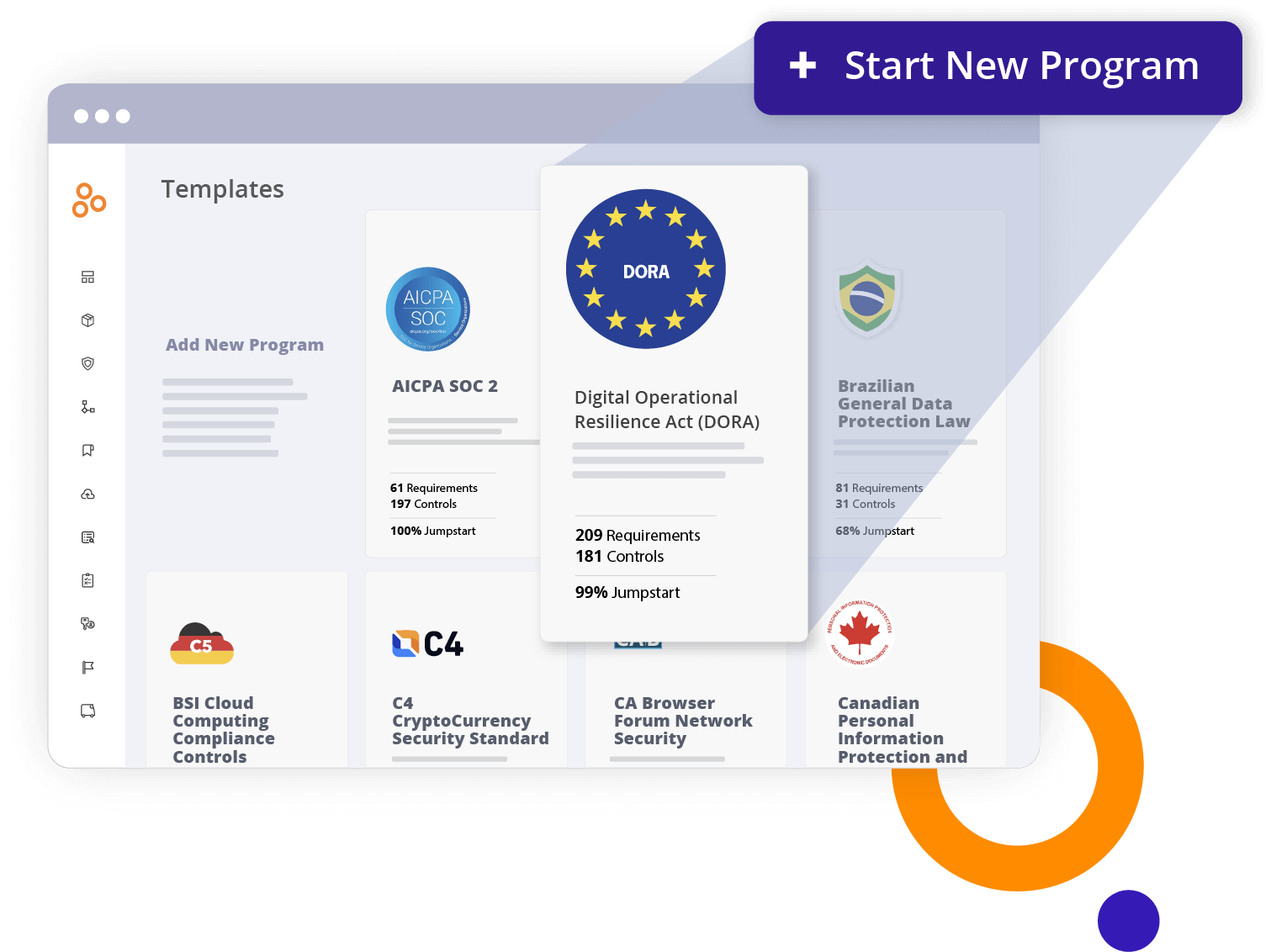
Hyperproof's out-of-the-box DORA framework template
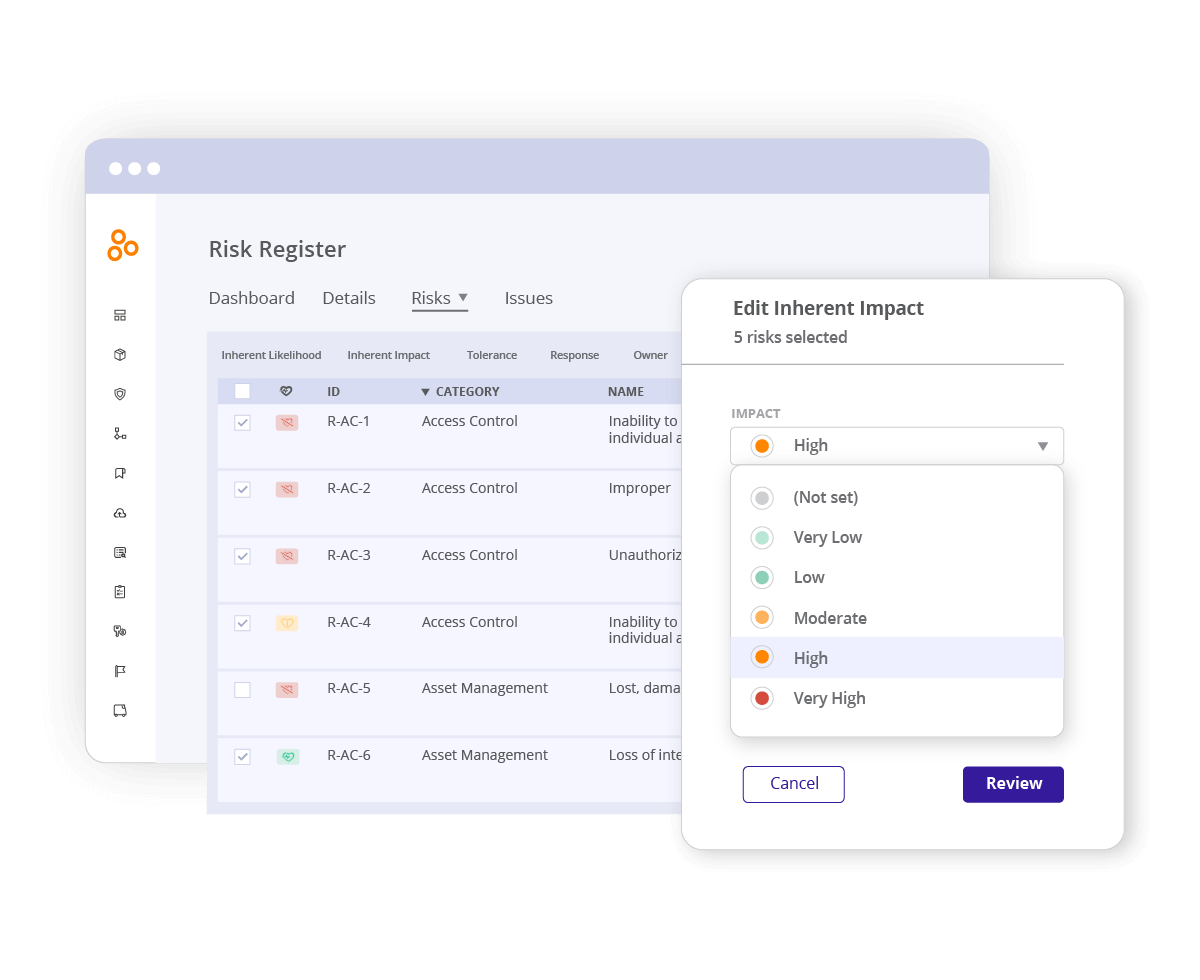
The "Risks" tab in Hyperproof's risk register dashboard

Gather and monitor all your risks in one place

Prevent ICT disruptions by collecting, managing, and monitoring your risks in one place. Ensure risk mitigation work is prioritized and completed based on management-approved risk tolerance levels and impact assessments.

Map controls across multiple frameworks

Operational resilience doesn’t start and stop with DORA. Crosswalk controls between programs to speed up DORA implementation and avoid duplicative work when adhering to other EU frameworks like NIS2, GDPR, and more.
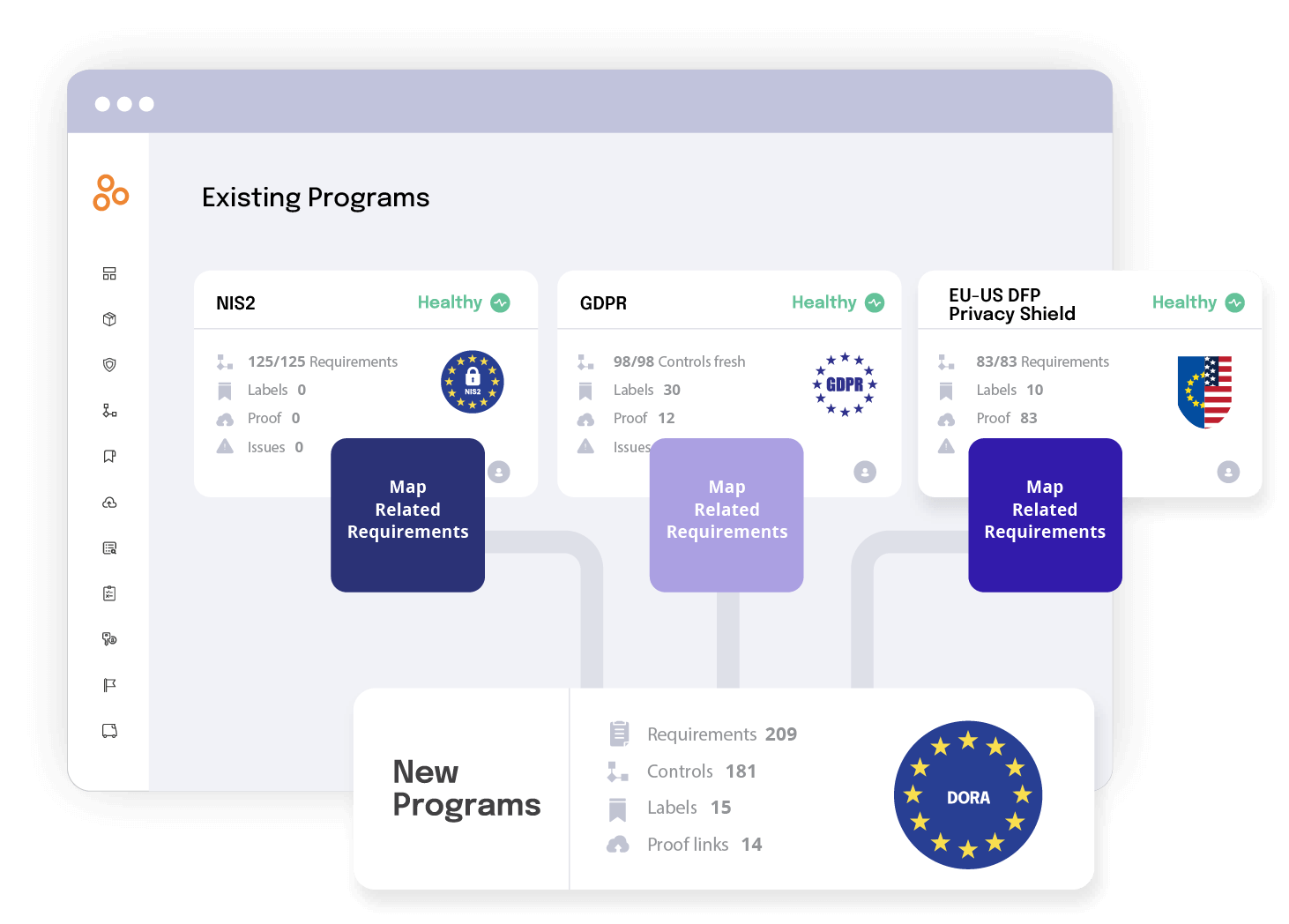
Map controls across multiple frameworks with existing programs in Hyperproof
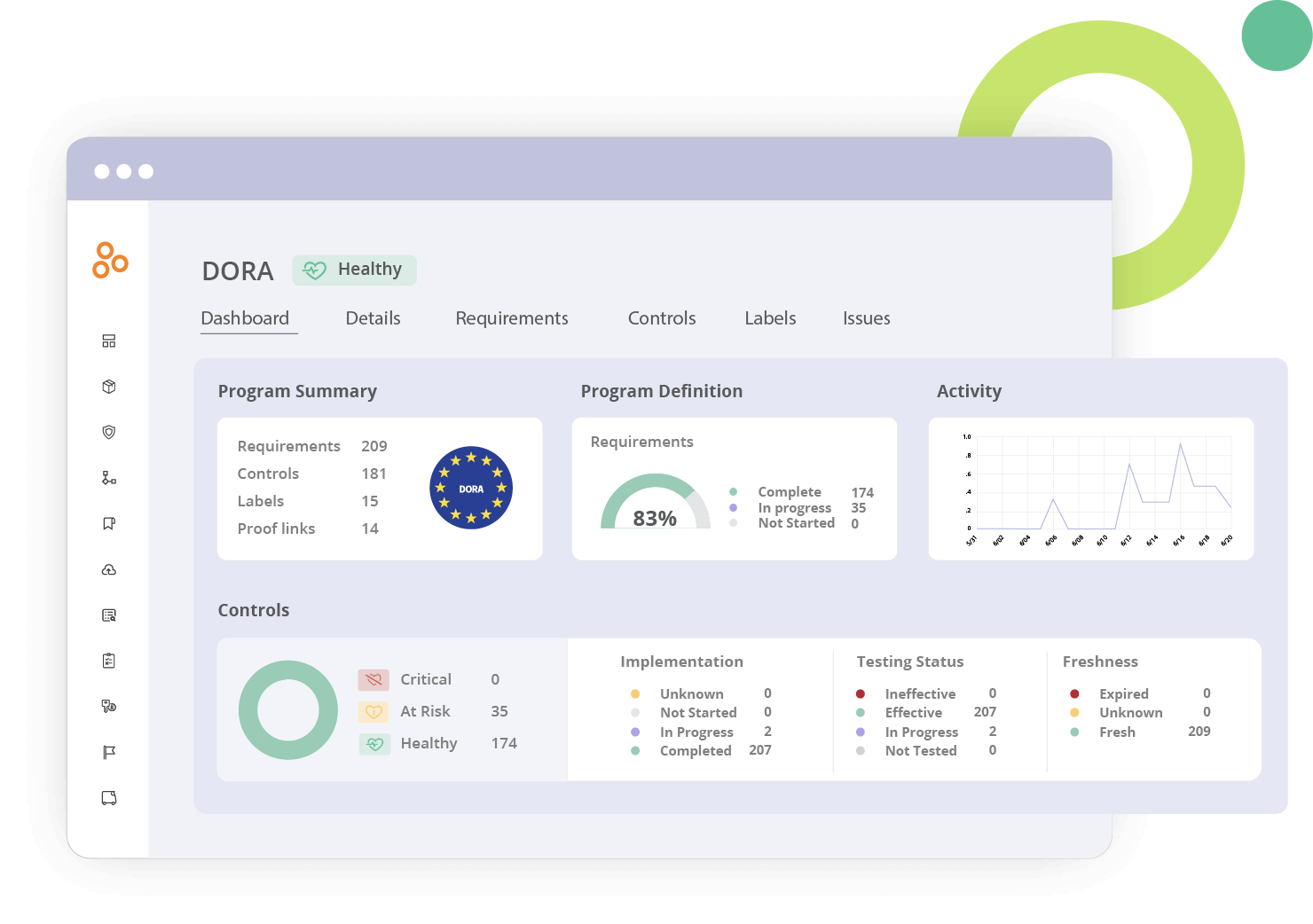
The DORA dashboard in Hyperproof includes program summary, program definition, activity, and a glance at control health

Understand your DORA compliance posture at a glance

Get clear insights into your team’s progress to become DORA compliant with Hyperproof’s dashboards and reports, designed for easy sharing with key stakeholders.

Ensure tasks are completed to meet your DORA timeline

Automatically assign tasks, like incident reporting workflows, testing schedules, and documentation updates, to meet DORA requirements to boost efficiency so you never have to worry about delays.
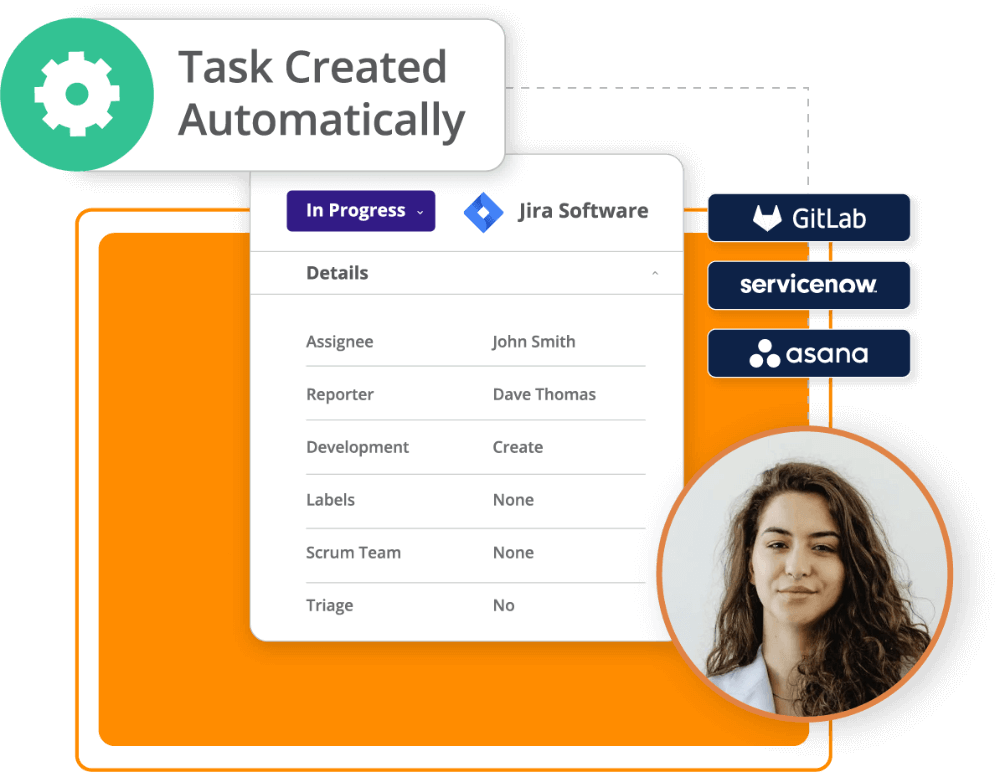
A view of integrations (Jira, GitLab, servicenow, asana) in Hyperproof showing details like assignee, reporter, development, labels, scrum team, and triage.
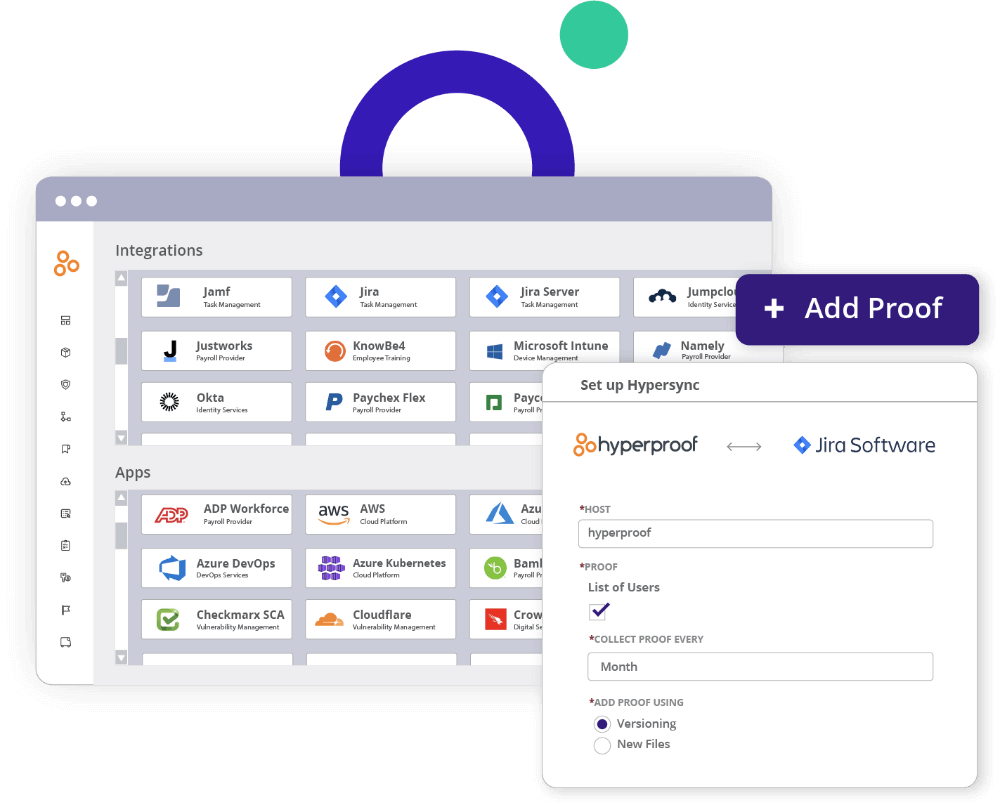
The Integrations dashboard in Hyperproof with a pop-up example of setting up a Hypersync

Automatically gather evidence to meet DORA requirements

Leverage Hyperproof’s powerful integrations including AWS, Azure, Github, Jira, and more to automate evidence collection and reuse that evidence across multiple controls.

See Hyperproof in action

Book a demo and see how Hyperproof works for DORA compliance.

Powerful integrations that streamline DORA compliance

Communicate seamlessly with stakeholders

Manage tasks and projects without having to switch tools

Automate evidence collection and review processes

Make continuous monitoring and compliance a reality

Support at every step of your compliance journey

Hyperproof Customer Success Team - Courtney B.

Dedicated customer success

Delighting our customers is our number one priority. We offer support for every step along your DORA compliance journey.

DORA Expert - Jason P.

Hyperproof partners offer DORA expertise

Whether you need guidance on framework implementation and compliance program management or help with audits and assessments, our trusted MSSPs can help.

DORA Frequently Asked Questions

The Digital Operational Resilience Act, or DORA, sets out unified digital resilience rules for European Union (EU) financial services organizations and their technology suppliers. DORA’s primary purpose is to keep critical digital services running and to standardize risk management across the EU financial sector. It requires Information and Communication Technology (ICT) risk management systems, DORA-aligned contracts with third-party service providers, and complete registers of ICT services for oversight.

DORA became fully applicable on January 17, 2025, after a two-year window for implementation and the creation of ICT registers.

For more information, read our ultimate guide to DORA.

DORA applies directly to EU financial entities, including banks, insurers, investment firms, payment providers, electronic money institutions, and certain crypto-asset service providers. However, many technology companies that support these institutions are indirectly affected because their customers must assess and monitor ICT third-party resilience.

DORA is likely applicable to your organization if you:

  • Provide technology or cloud services to EU financial institutions
  • Support critical or important operational functions
  • Process financial or transactional data for regulated entities
  • You are likely already part of your customers’ DORA compliance efforts.

Failure to prepare can result in:

  • Regulatory scrutiny or remediation orders
  • Financial penalties for in-scope entities
  • Contractual risk or lost business for third-party providers
  • Increased due diligence and ongoing monitoring requirements

Hyperproof’s DORA compliance software helps both regulated entities and their technology providers demonstrate resilience, maintain documentation, and respond confidently to regulatory or customer inquiries.

DORA is designed to ensure that financial institutions can withstand, respond to, and recover from all types of ICT-related disruptions and threats. By adhering to DORA requirements, organizations gain:

1. Enhanced security: DORA’s stringent requirements on ICT risk management strengthen operational resilience and security posture.

2. Consumer confidence: DORA aims to enhance consumer confidence in the financial system by ensuring that institutions are prepared to handle ICT disruptions.

3. Harmonization: DORA provides a unified regulatory framework that ensures consistency and comparability, harmonizing ICT risk management practices across the EU.

4. Operational resilience: DORA emphasizes the importance of operational resilience to ensure that financial institutions can maintain critical services despite severe disruptions.

The main requirements of DORA include risk management, incident reporting, resilience testing, third-party risk management, and governance. Broadly speaking, organizations must meet the following requirements to become DORA-compliant:


  • Implement comprehensive risk management frameworks to address ICT-related risks
  • Use a standardized process for reporting significant ICT-related incidents to authorities
  • Regularly test ICT systems and processes
  • Manage risks arising from third-party ICT vendors
  • Share cyber threat information and intelligence among financial institions
  • Implement robust governance and control mechanisms

You can learn more about requirements and implementation in our DORA Compliance Guide.

DORA emphasizes continuous oversight of ICT third-party risk. Hyperproof strengthens third-party risk management by:

  • Centralizing third-party assessments and risk ratings
  • Automating task assignments for reviews and renewals
  • Tracking remediation of vendor findings
  • Linking vendors to associated risks and controls

Through integrations with identity providers, cloud platforms, and ticketing systems, organizations can reconcile authorized vendors against actual system usage — helping surface shadow IT and unapproved SaaS tools.

This approach ensures your DORA compliance software supports proactive risk management, not just documentation.

Get Started with DORA compliance

G2 Crowd Leader
G2 Crowd Best Estimated ROI
G2 Crowd Best Customer Support Enterprise
G2 Crowd Fastest Implementation
G2 Crowd Momentum Leader