5 Compliance Automation Stories with Real ROI

Updated on: Feb 24, 2026 8 Minute Read
Compliance can quickly become a scaling challenge for fast-growing organizations. The scope expands from “one big audit” to a year-round GRC program spanning multiple frameworks, customers, regions, and internal teams. What starts as a manageable set of controls and evidence gathering turns into constant coordination, keeping requirements aligned, proving controls are operating, and responding to auditors and customer requests without pulling the business to a halt.
Common compliance pain points we’re seeing in the market
Most teams hit the same friction points: compliance work lives in fragmented systems (spreadsheets, shared drives, tickets, email), which makes evidence hard to find, easy to duplicate, and difficult to keep current. Ownership is unclear across dozens of control owners, leading to chasing, rework, and missed deadlines. On top of this, working in fragmented systems can increase the risk of a data breach. Our 2026 IT Risk and Compliance Benchmark Report showed that an integrated, automated approach to risk management is linked to a reduction in breaches. The data is clear: 50% of respondents who manage risk ad hoc or only after a negative event reported a breach in 2025, compared to just 27% of those who take an integrated, automated approach.
As frameworks overlap (SOC 2®, ISO 27001, HITRUST, FedRAMP, PCI DSS, etc.), teams end up rebuilding the same control narratives and re-collecting the same artifacts repeatedly. The result is a reactive, audit-driven cycle with limited real-time visibility for leaders into what’s on track, what’s at risk, and what it will take to close gaps.
Story 1: How AGDATA went from “a giant Excel spreadsheet” to scalable audits
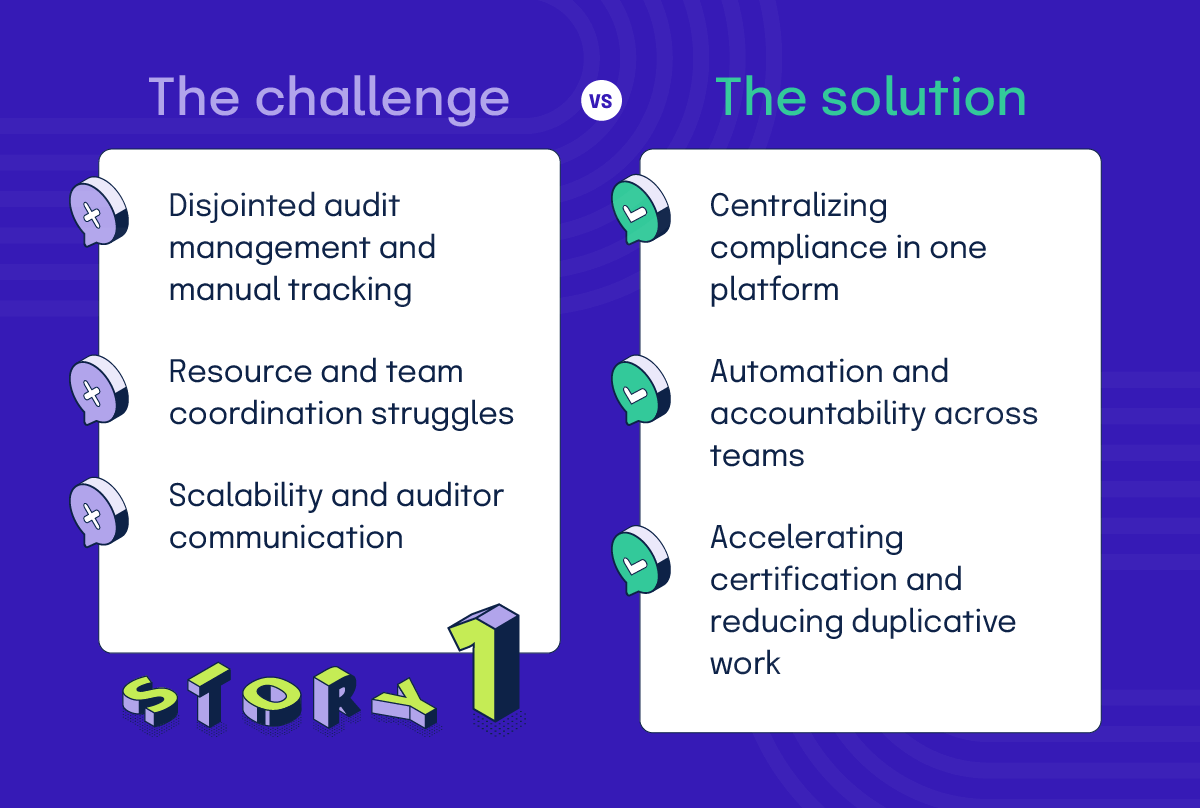
AGDATA, a global agricultural data and analytics company, was struggling to manage SOC 1 and other audits with a patchwork of spreadsheets, Jira, and email threads. This was leading to duplicated work, unclear ownership, version-control issues, and lots of manual follow-ups across a broad set of stakeholders (5 core audit team members but 40+ employees involved). When they set out to pursue ISO 27001, the lack of a centralized system made it hard to map controls, organize evidence, and keep auditors and control owners aligned.
By implementing Hyperproof, AGDATA centralized audit work into a single platform, automated task assignment and reminders, and reused mapped controls/evidence across frameworks to speed ISO 27001 certification.
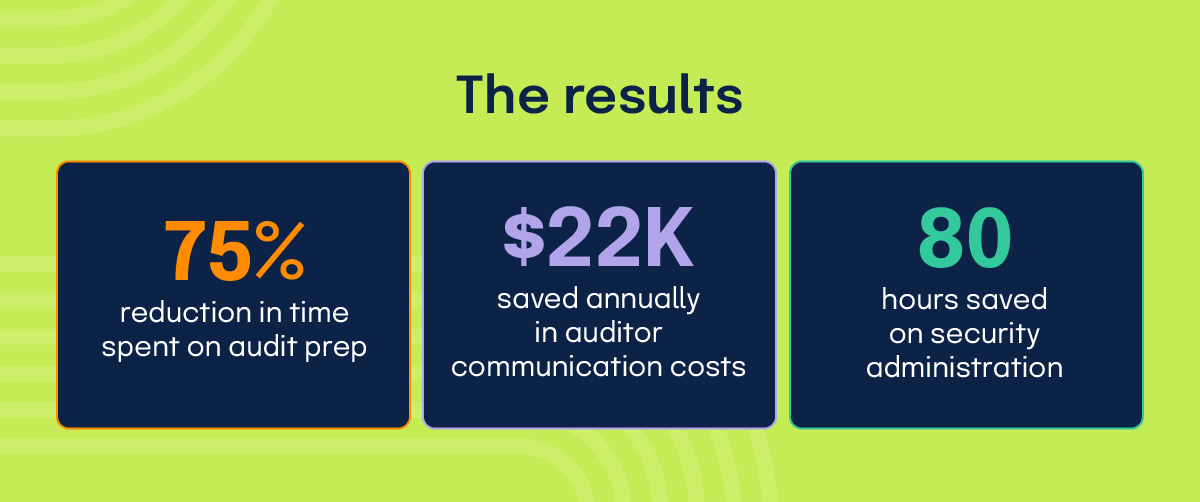
Working with Grant Thornton directly inside Hyperproof further streamlined audit communication as auditors could comment and request evidence in-platform, and control owners could respond directly, reducing handoffs and delays. AGDATA reports a 75% reduction in time spent on audit preparation, about $22,000 saved annually in auditor communication costs, and 80 hours saved on security administration.
Story 2: How Acuity International cut GRC workload by 70% without sacrificing rigor
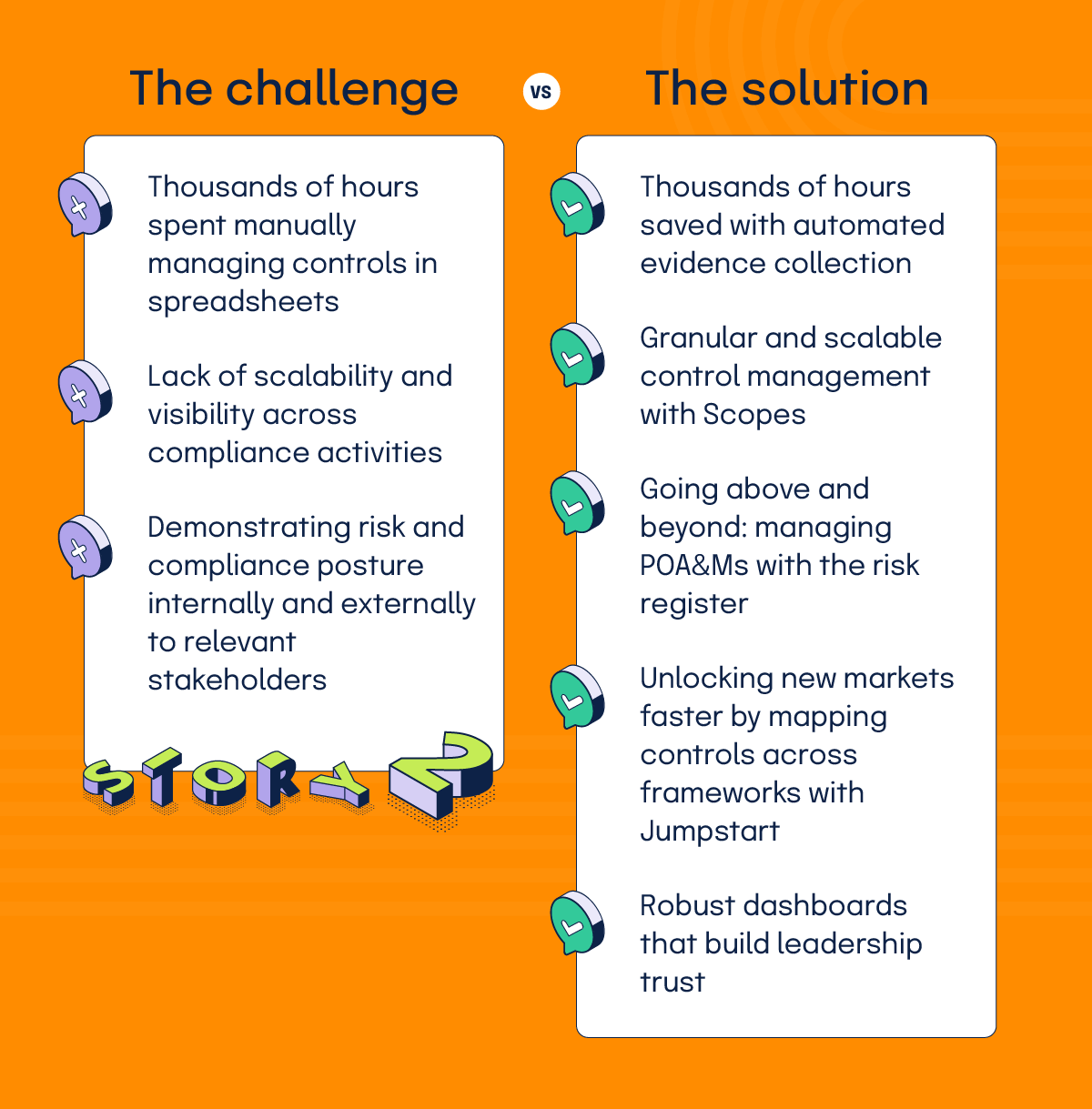
Acuity International, a lean GRC team supporting government and commercial clients, was spending roughly 4,000 hours per year managing governance packages and preparing for audits across multiple frameworks. This was largely due to manual evidence collection, versioning, and coordination in spreadsheets and SharePoint, with limited visibility into real-time compliance gaps.
They needed a scalable way to manage over 1,000 controls across frameworks like FedRAMP Moderate, FISMA Moderate, SOC 2® Type II, CMMC 2.0, and ISO 27000, while separating compliance data by system and reusing evidence to avoid duplicative work.
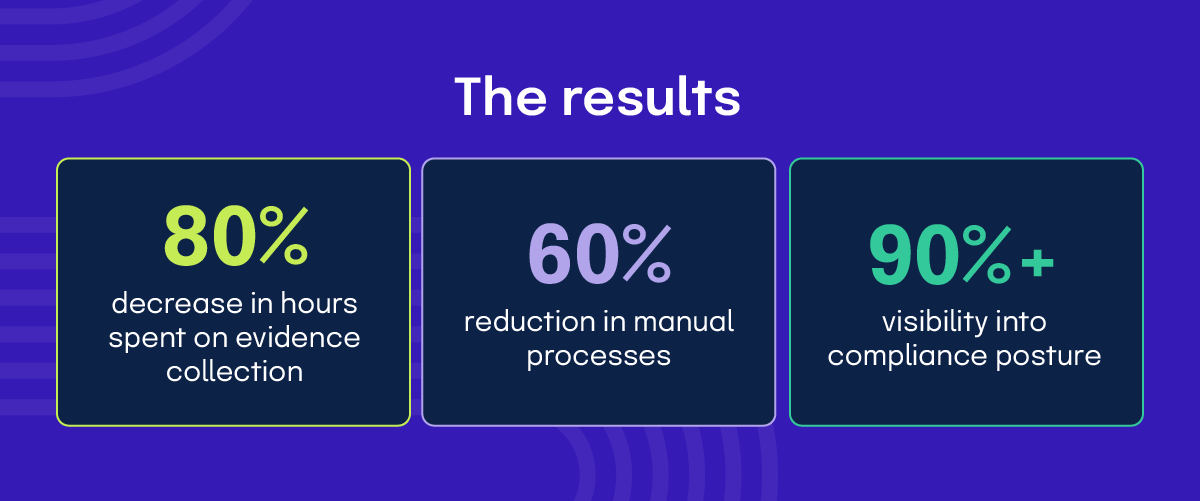
With Hyperproof, Acuity International centralized GRC work and used Hypersyncs to automate evidence collection and keep controls continuously up to date. This cut audit prep time by 70% and reduced manual processes by 60%, including shrinking System Security Plan creation from 30 hours to 3 hours.
They also used Scopes to segment and monitor control health at the entity/system level, and extended the risk register (with custom fields) to manage POA&Ms, linking control health to risk prioritization. Using Jumpstart/Crosswalks, they mapped and reused controls across frameworks (e.g., reusing 80 controls from NIST 800-53 to build their SOC 2® program), and leveraged dashboards to achieve over 90% visibility into compliance posture, helping build leadership trust and support growth into new government markets.
Story 3: How Appian used Hyperproof to streamline GRC for 28 frameworks
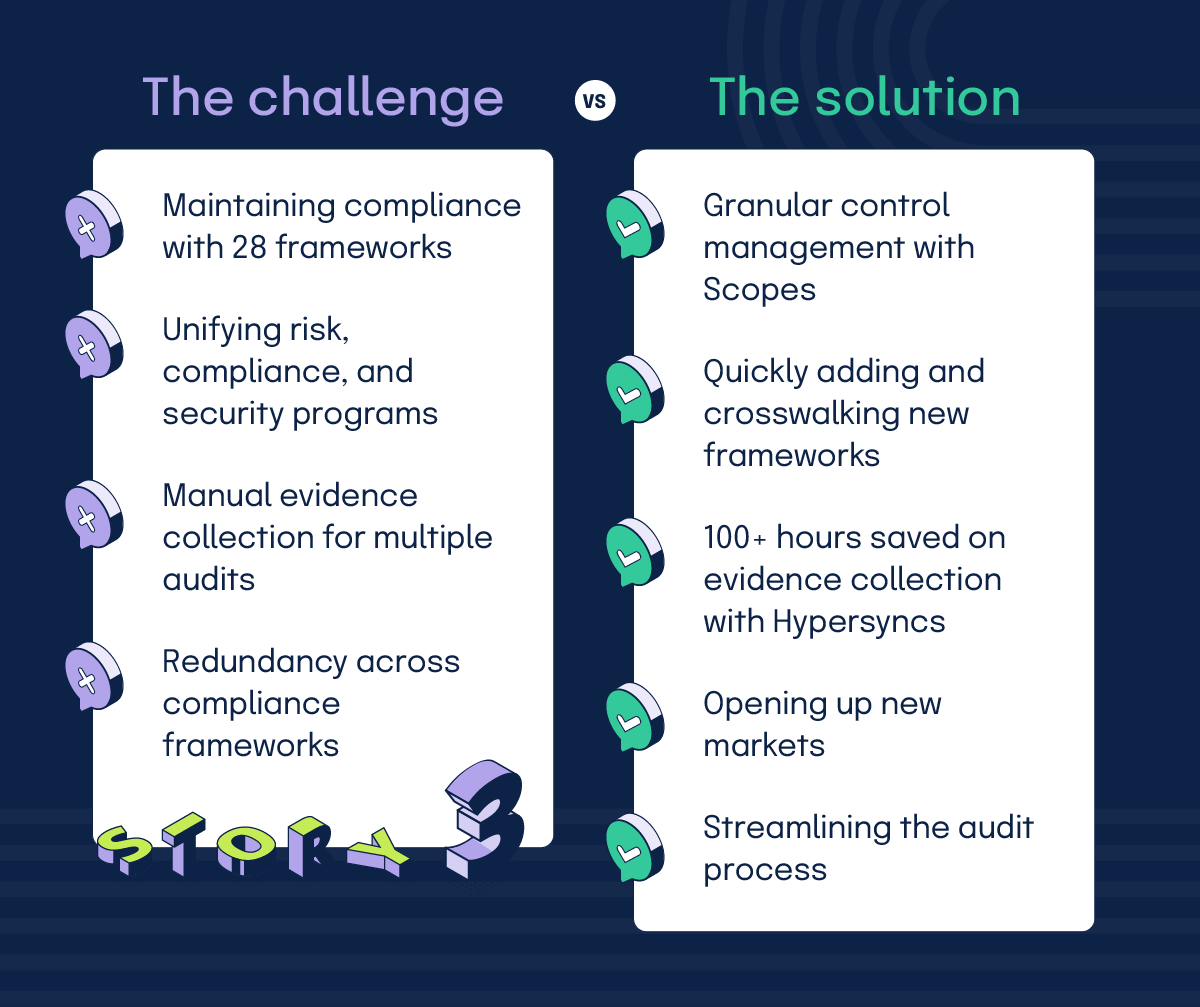
Appian, a low-code/no-code platform serving highly regulated industries, needed a better way to manage compliance across 28 frameworks and regulations and keep 600+ controls current under its shared responsibility model.
With a 10-person team supporting a much larger network (over 600 employees involved in security, risk, and compliance), they were bogged down by manual upkeep, redundant controls across frameworks, and especially manual evidence collection for 21 audits, where evidence was often outdated and required constant chasing and rework.
After evaluating 10 platforms over nearly a year, Appian chose Hyperproof to unify risk, compliance, and audit readiness. They leaned on Scopes to manage controls granularly across different entities/teams and provide tailored views for different roles, Jumpstart/Crosswalking to understand overlap and reduce duplication when adding frameworks, and Hypersyncs to automate and continuously refresh evidence.
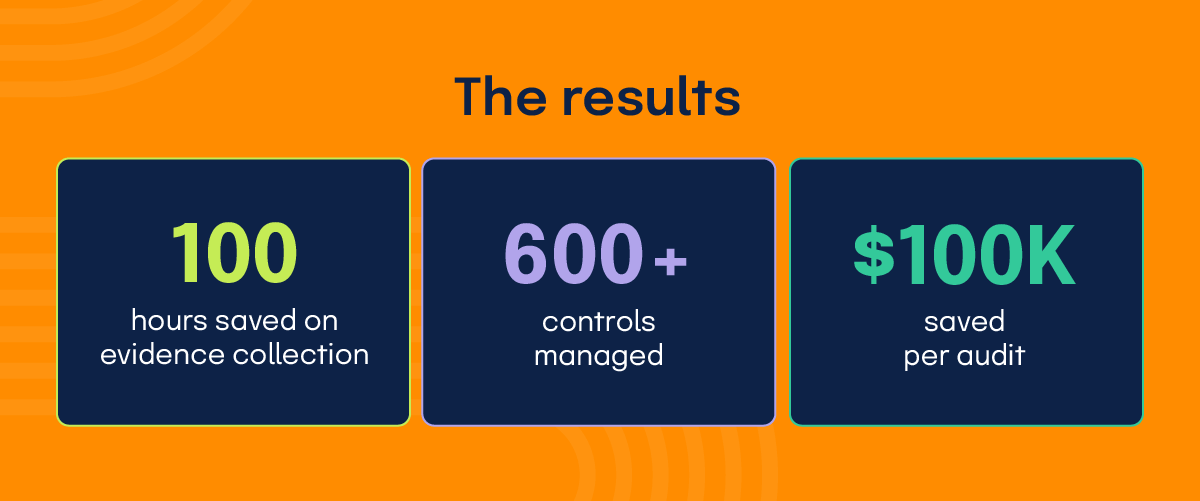
Now, they’re saving over 100 hours on evidence collection, keeping 600+ controls managed, and delivering about $100,000 saved per audit while helping them stay ready for an audit at any given moment and expand into new markets more efficiently.
Story 4: How OutSystems scaled audits with a lean team (and saved 9+ months of audit support time)
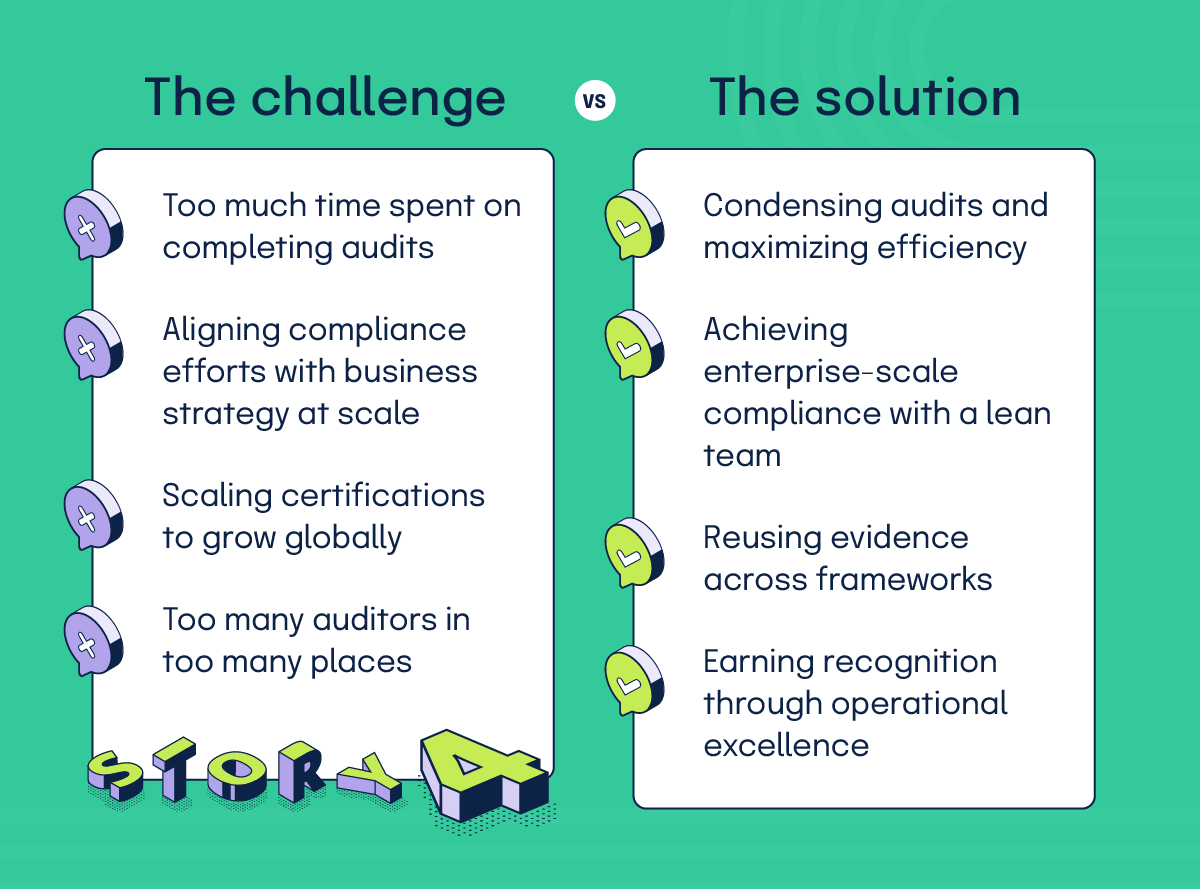
OutSystems, a global low-code platform company, found its lean GRC team of four people overwhelmed by a rapidly expanding compliance portfolio, consisting of multiple ISO reports, PCI DSS and SOC assessments, plus constant requests for new standards tied to customer and regional demands.
The entire year was spent on audit after audit, and the challenge extended beyond volume alone. Coordinating alignment across sales and impacted internal teams, managing overlapping requirements without a centralized system, and juggling multiple audit firms created duplicated walkthroughs, repeated evidence requests, and poor visibility into progress.
To scale, OutSystems partnered with Aprio and standardized on Hyperproof as a centralized hub, cross-mapping overlapping frameworks and unifying control mappings so evidence could be reused across assessments (e.g., change-management artifacts supporting SOC 2® could also support ISO 27001).
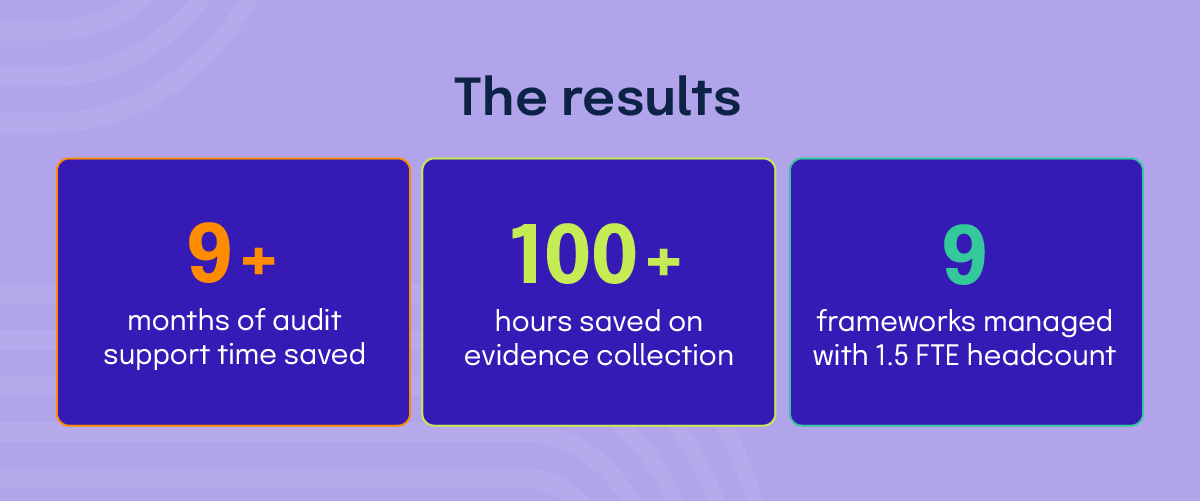
They condensed what had been 12 separate audits across five firms into a single, integrated audit sprint with one auditor embedded in Hyperproof, saving 9+ months and hundreds of hours of audit support time, along with 100+ hours on evidence collection, while managing 9 frameworks with the equivalent of 1.5 FTE effort.
Story 5: How Artemis Health took on HITRUST by using Hyperproof to truly operationalize compliance
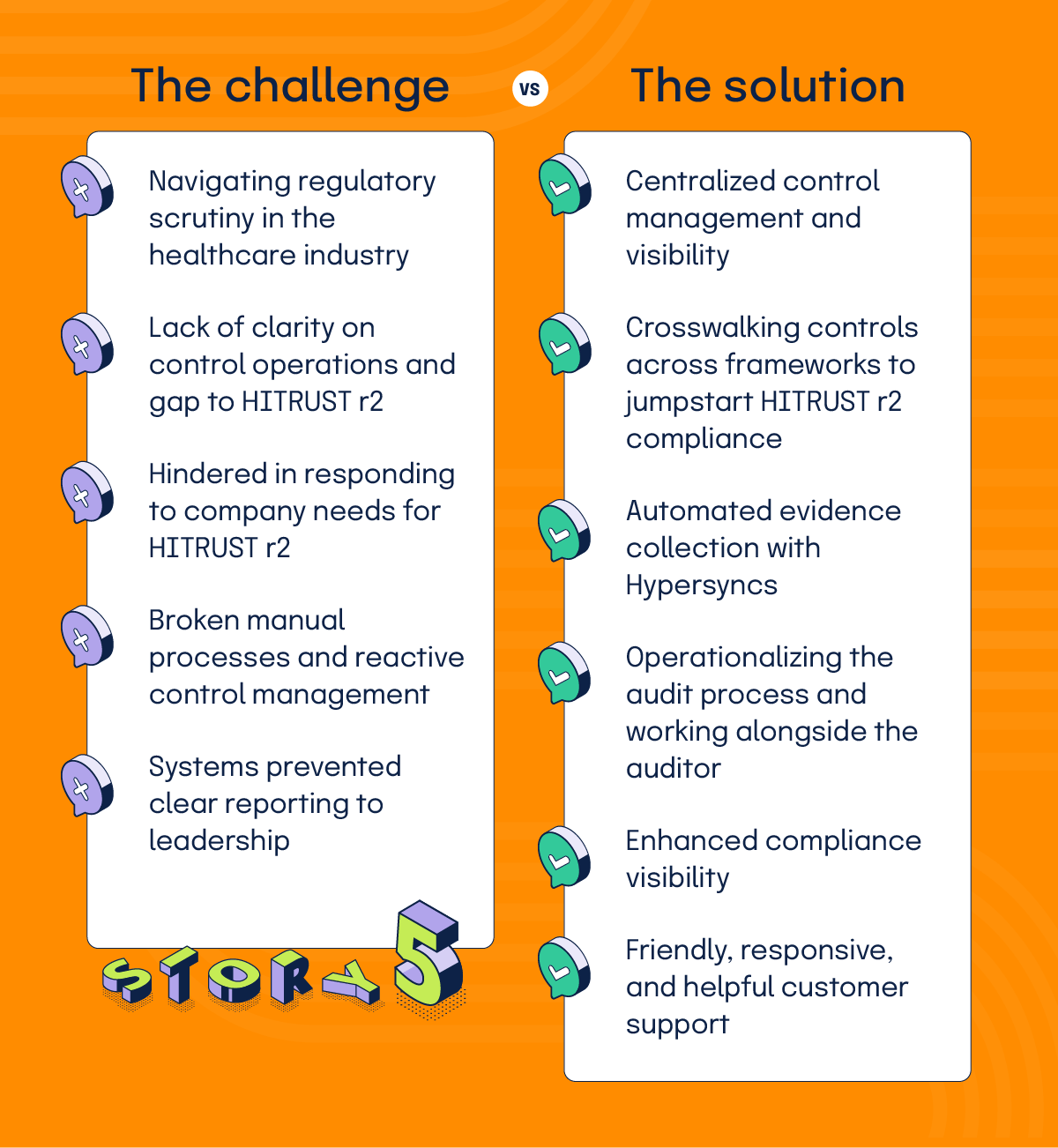
Artemis Health (by Nomi Health), a healthcare analytics software provider handling sensitive patient data, needed to streamline compliance work for SOC 2® Type II and their move from HITRUST e1 toward HITRUST r2. A five-person security/compliance team had been managing controls and evidence through spreadsheets and Jira, which made compliance feel “mysterious,” offered little visibility into progress, and forced reactive, manual work, especially when auditors requested evidence and the team had to transfer it into external auditor systems. This lack of clarity also made it hard to explain to leadership what it would take to close gaps and expand from SOC 2® into HITRUST.
Using Hyperproof’s Compliance Operations and Risk Register modules as a centralized “control command center,” Artemis Health linked controls to show how they work together, used Jumpstart to crosswalk overlaps between SOC 2® and HITRUST to avoid duplicative effort, and implemented Hypersyncs to automate evidence collection. They also invited auditors into their Hyperproof instance to reduce manual handoffs and leveraged dashboards for leadership-ready reporting.
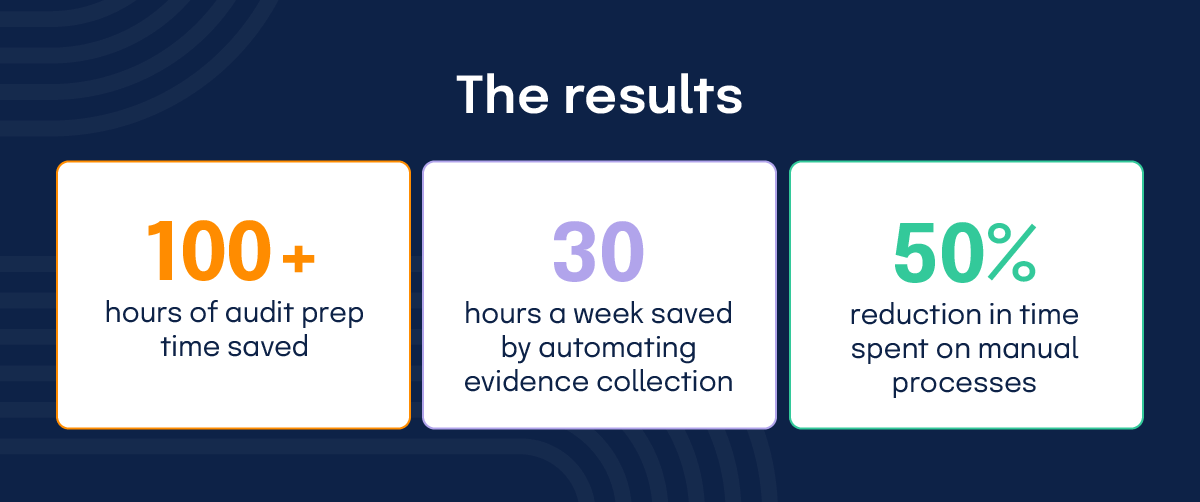
The reported outcomes include 100+ hours saved in audit prep time, ~30 hours per week saved through automated evidence collection, and a 50% reduction in time spent on manual processes.
What these stories have in common
Across all five case studies, the companies start in the same place: a small-to-medium GRC/compliance team is trying to support a fast-growing business using fragmented, manual tools (spreadsheets, Jira/SharePoint, email), which creates duplicated work, stale evidence, unclear ownership, and endless follow-ups, especially as the number of frameworks and audits multiplies. Each organization also faces the scale problem, lots of stakeholders outside the core GRC team (dozens to hundreds of control owners), overlapping requirements across frameworks, and pressure to prove readiness continuously instead of solely during audit season.
They all solve it in a similar way: They centralize compliance operations in Hyperproof, then reduce duplication by mapping/crosswalking controls across frameworks and automate evidence collection to keep controls continuously current. Several also streamline auditor collaboration by working directly with audit partners in-platform, cutting handoffs and cycles. The consistent outcomes are:
If you want to see how Hyperproof can solve your compliance pain points, request a demo.
See Hyperproof in Action
Related Resources


Ready to see
Hyperproof in action?