2026 GRC Budget Trends: How Organizations are Managing Spend and Delivering ROI

Updated on: Jul 10, 2026 6 Minute Read
Findings from Hyperproof’s 2026 IT Risk and Compliance Benchmark Report show many organizations are sustaining or increasing investment, and reported 2026 budget levels indicate that GRC programs are expected to deliver measurable value across multiple fronts: regulatory readiness, customer assurance, risk reduction, and resilience.
In this blog post, we summarize four key findings from the survey of GRC teams and provide tips on how your team can ensure needed resources and deliver ROI from your GRC budget this year.
GRC budgets are up — and demand isn’t slowing down
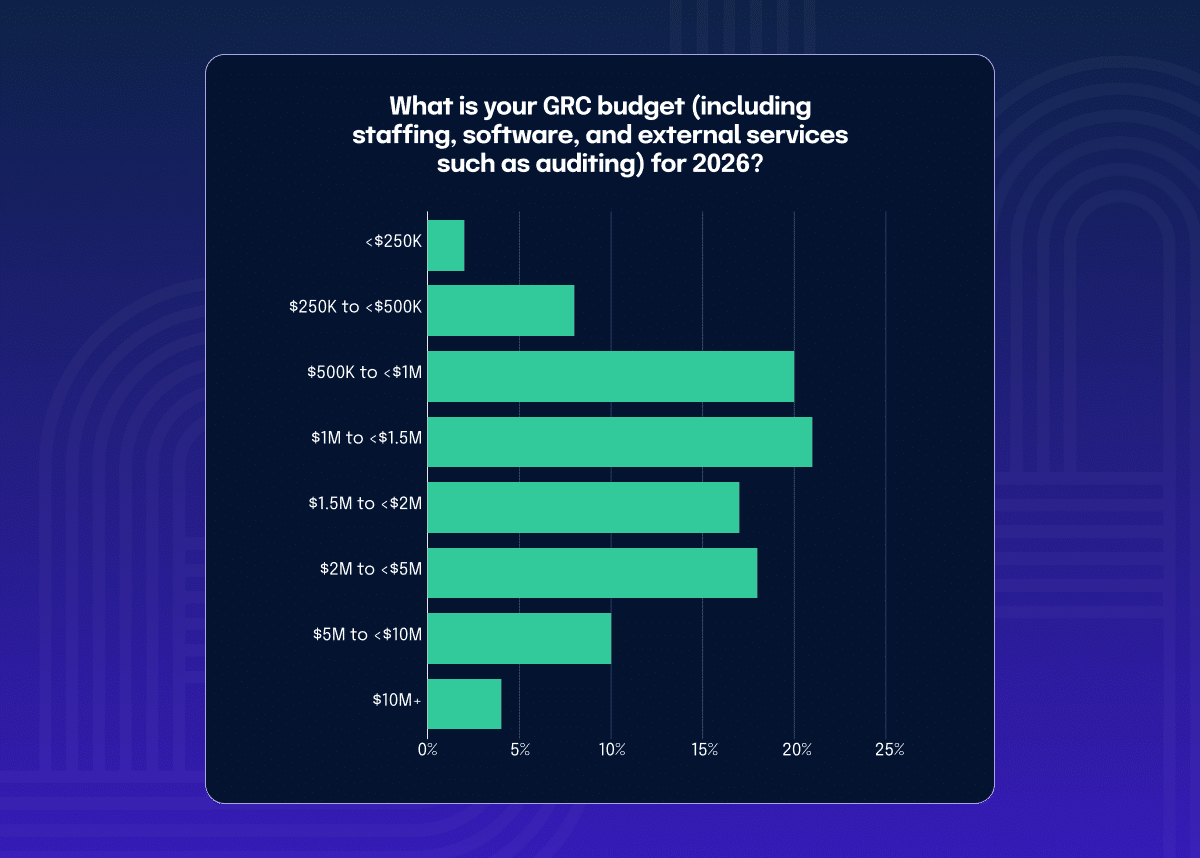
Reported 2026 GRC budgets skew high. 70% of respondents report a 2026 GRC budget of $1M or more, signaling that many organizations view GRC as a strategic operating function with real investment behind it, not a side-of-desk responsibility.
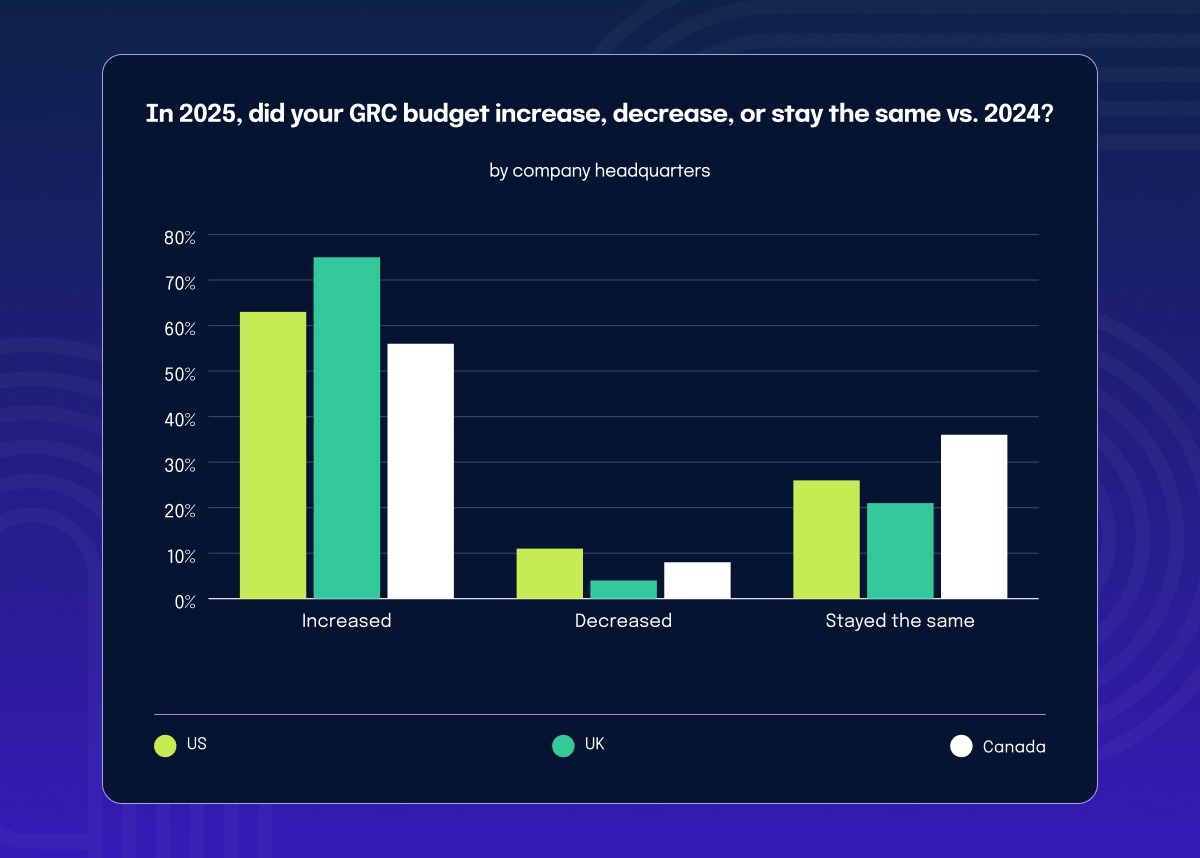
Budget direction varies meaningfully by headquarters. Respondents in the UK were more likely to report that their GRC budget increased in 2025 (75%) than those in the US (63%) or Canada (56%). This suggests a more consistently expansionary posture among UK-based organizations in this sample, potentially reflecting stronger near-term demand signals around assurance, regulatory readiness, and ongoing compliance execution.
Budget momentum is not uniform across industries. Technology respondents reported increases more frequently (72%) than manufacturing (57%), indicating that technology organizations may be continuing to fund GRC as an enabler of scale, customer trust, and rapid change management. Manufacturing, banking, and healthcare, by contrast, appear comparatively more budget-conservative, which may reinforce the importance of prioritization and operational efficiency as programs are expected to mature at a slower rate of funding expansion.
How GRC pros are divvying up their budgets
When respondents break down how their budget is allocated, the averages point to a balanced investment model. The largest share is allocated to headcount at 28%, and software tools follow closely behind at 24%. The remaining allocation is distributed across MSSPs, professional services, and audits.
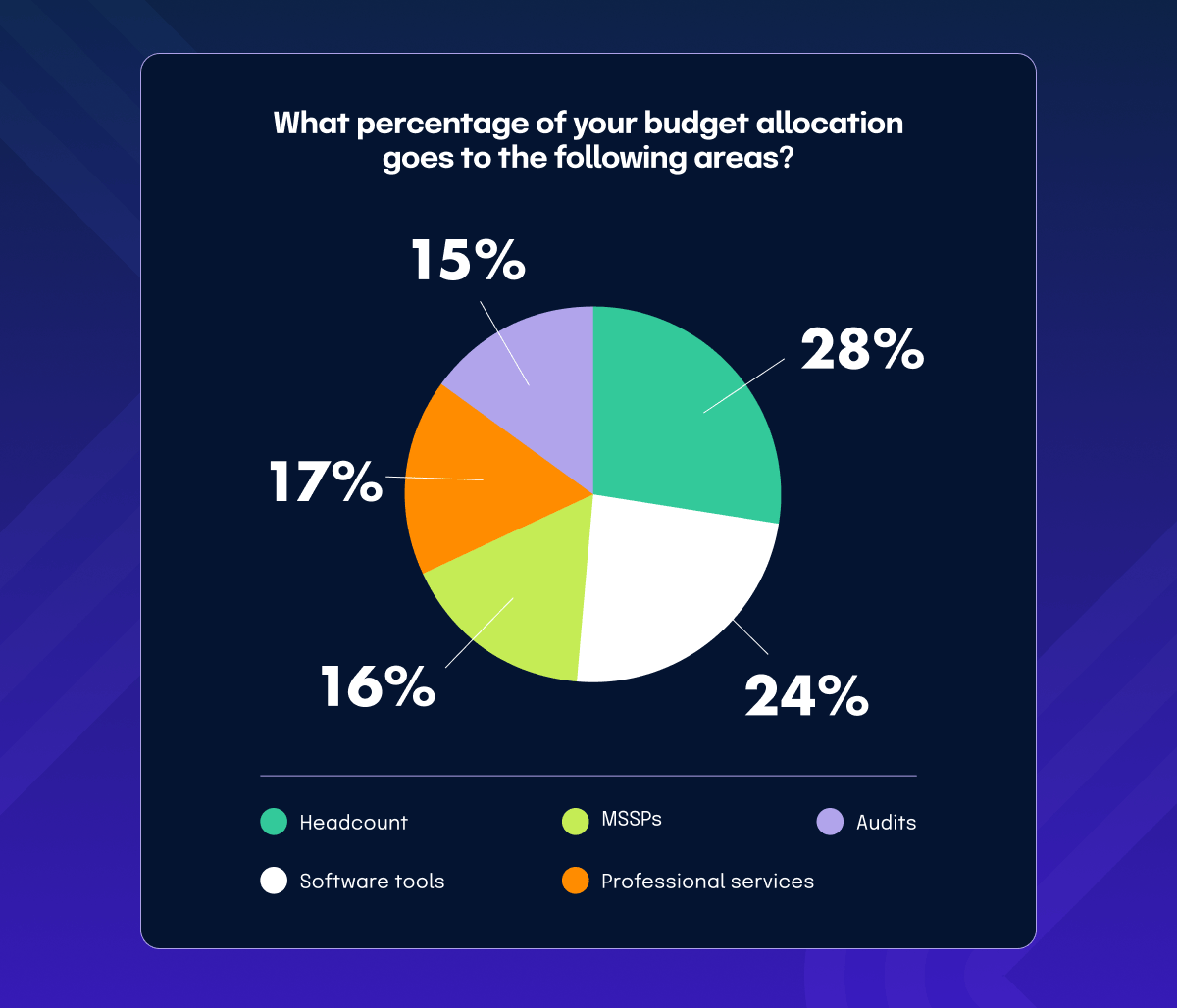
Many programs are building internal capacity while relying on outside support for specialized needs. Findings also reinforce that software investment is not just a tooling line item, it is a lever for reducing recurring administrative effort, strengthening traceability, and enabling consistent reporting across a growing set of requirements.
Regulation and cloud growth: why the pressure on GRC budgets isn’t letting up
Among respondents expecting higher spend, the top drivers are dominated by external volatility and internal complexity.
Regulation is not simply increasing; it is changing, being enforced, and expanding in scope. In early 2025, the EU Digital Operational Resilience Act (DORA) became fully applicable, and prohibitions under the EU AI Act were effective. Important rules and deadlines for both the Cybersecurity Maturity Model Certification (CMMC) and the NIS2 Directive went into effect just prior to 2025.
At the same time, cloud growth continues to amplify the control surface area that GRC programs must manage and evidence.
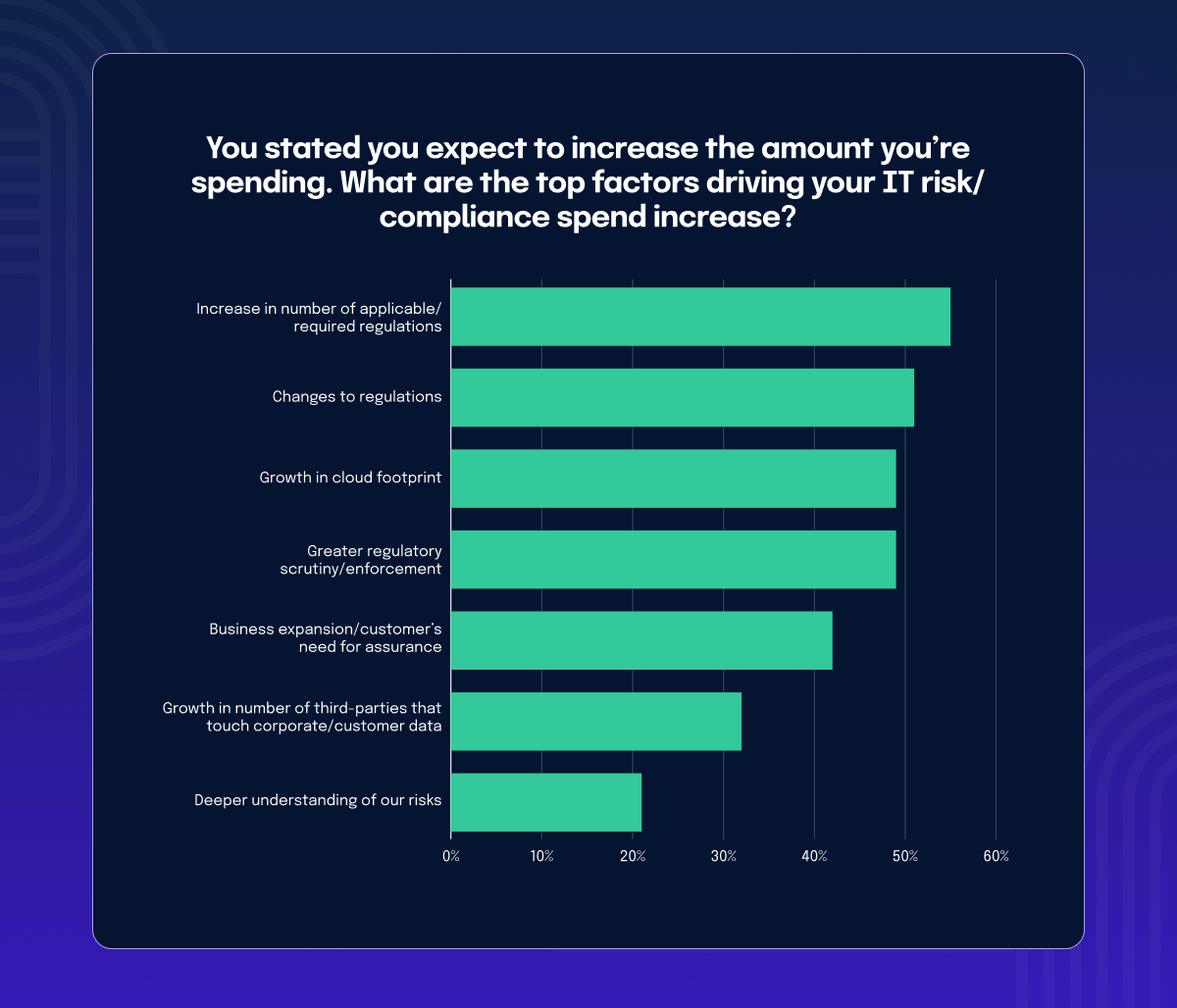
Spend increases are not discretionary upgrades. They are responses to structural conditions that are unlikely to reverse. In that environment, the ROI discussion becomes less about whether to invest and more about how to ensure investments reduce recurring operational inefficiency.
Organizations reporting sufficient budget are using an integrated tool and automated processes
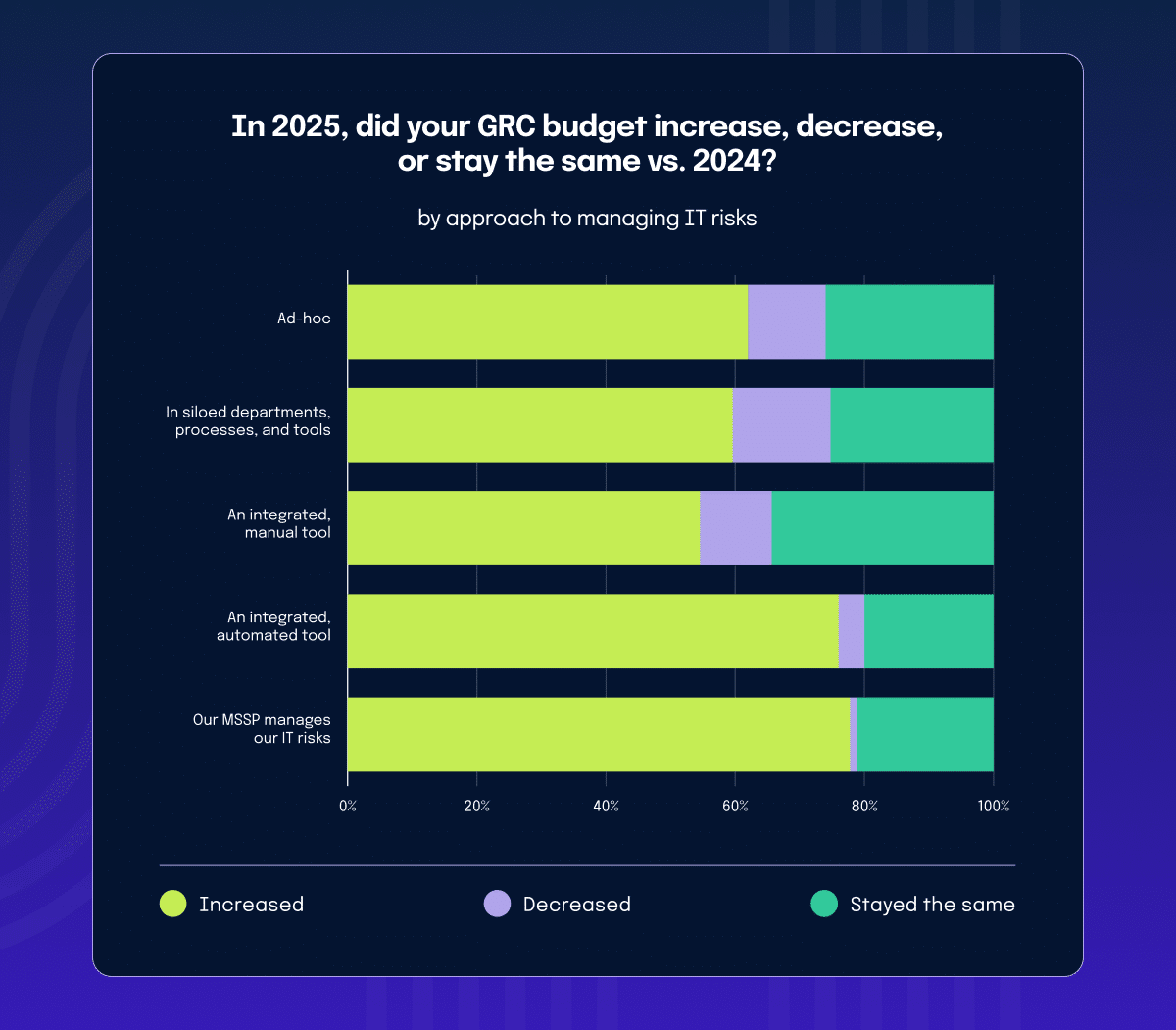
Budget direction aligns with how risk and compliance work is operationalized. Respondents using an integrated tool where processes are mostly automated were more likely to report budget increases (76%) than those using an integrated tool where processes are mostly manual (54%). Organizations investing in automation may also be investing more broadly in modernizing their GRC operating model, while more manual environments may face greater constraints or slower funding velocity.
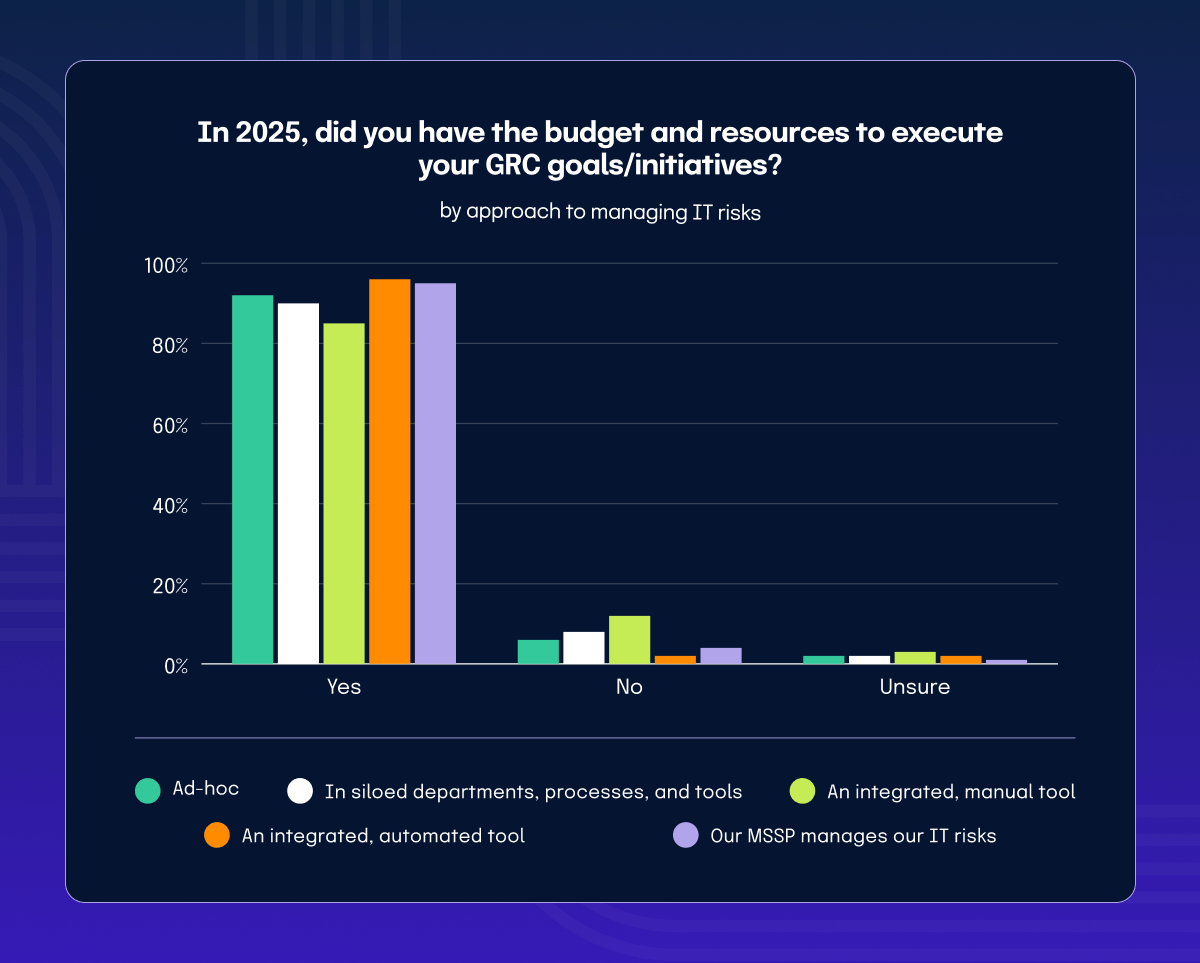
Respondents using an integrated tool with mostly automated processes were more likely to say they had sufficient budget and resources (96%) than those using an integrated tool with mostly manual processes (85%) or those managing risk in siloed departments, processes, or tools (90%). Automation is not only a productivity lever; it changes how “resourced” a team feels by reducing the coordination load and the manual effort required to maintain readiness.
Delivering ROI and guaranteeing your GRC budget
Across these GRC budget findings in Hyperproof’s benchmark report, one conclusion stands out: strong returns come from building an operating model that adapts to change, supported by standardized processes and technology that reduces manual overhead and strengthens traceability.
To achieve these strong returns, here are two recommended steps.
Make the business case for increased automation
As regulatory frameworks expand, third parties proliferate, and internal stakeholders multiply, the workload of GRC teams often grows faster than headcount. Programs that can reduce administrative effort, centralize evidence, and standardize workflows tend to unlock outsized ROI. This latest benchmark report clearly demonstrates that organizations deploying an integrated tool with mostly automated processes feel more equipped to execute GRC goals and manage IT risks.
Other data backs up these findings. Conclusions from a recent global GRC survey of senior decision-makers led McKinsey to say: “Indeed, we are convinced that only a combination of human expertise and smart technologies in GRC will enable companies to tackle the increasingly demanding regulatory and risk environment.”
To get started, prioritize automation strategically by identifying the highest-risk areas and building toward development pipeline integration to make incremental progress and demonstrate value at each stage.
Consider these implementation strategies:
- Conduct a comprehensive inventory of manual compliance activities to identify automation opportunities.
- Prioritize automation based on risk level, regulatory scrutiny, and resource requirements.
- Measure and communicate time savings and risk reduction from early automation projects.
Strengthen the narrative to tie efforts to revenue
Findings from a recent Hyperproof benchmark report found that 55.8% of CISOs consider security and compliance a cost center rather than a business enabler. There is a real need to strengthen the narrative regarding how GRC work delivers business outcomes.
Framing security initiatives in terms of business value, customer requirements, and revenue protection rather than technical compliance can help shift perceptions of security as an operational expense. This repositioning requires consistent messaging and demonstrable business alignment.
Practical tactics you can take include:
- Document specific customer requirements satisfied by security and compliance capabilities.
- Calculate revenue protected or enabled by security programs.
- Identify competitive advantages created by strong security postures.
- Highlight security’s role in enabling business innovation and transformation.
For more tactics and tools to reposition GRC from a cost center to a value creator, read our guide on tying GRC efforts to revenue.
The core findings of Hyperproof’s benchmark report demonstrate that maturity on paper means very little if your day-to-day execution is weighed down by manual evidence collection and reactive workflows. Achieving operational resilience in the second half of 2026 – and looking ahead to budget planning for 2027 – requires clear centralization, deep workflow integration, and a commitment to continuous compliance.
Take the learnings from the 2026 IT Risk and Compliance Benchmark Report into planning sessions for 2H 2026
Related Resources



Ready to see Hyperproof in action?