GRC Platforms: 8 Features to Look For in 2026

Updated on: Aug 27, 2026 4 minute read
When it comes to adding a Governance, Risk, and Compliance (GRC) platform to your existing tech stack, there are a lot of things to consider. As global enterprises expand across products, legal entities, and geographies, managing compliance efficiently has become mission-critical. Redundant controls, fragmented GRC processes, and manual audit cycles slow down market expansion, increase operational costs, and drain team resources.
That’s why the right GRC platform shouldn’t be about checking boxes. It should be about driving growth, efficiency, and building trust at scale with the goal of transforming GRC from a cost center to a strategic value add. The best GRC software integrates enterprise risk management, vendor risk management, audit management, compliance operations, and governance workflows into a single platform. This eliminates silos and gives your team a unified view of your compliance posture.
What is a GRC platform?
A GRC platform is a centralized software solution that helps organizations manage governance, risk, and compliance activities in one place. It connects risks, controls, policies, and audits so teams can automate workflows, monitor compliance in real time, and give leadership a single, up-to-date view of their risk and compliance posture.
A GRC platform can:
Before you start evaluating GRC platforms
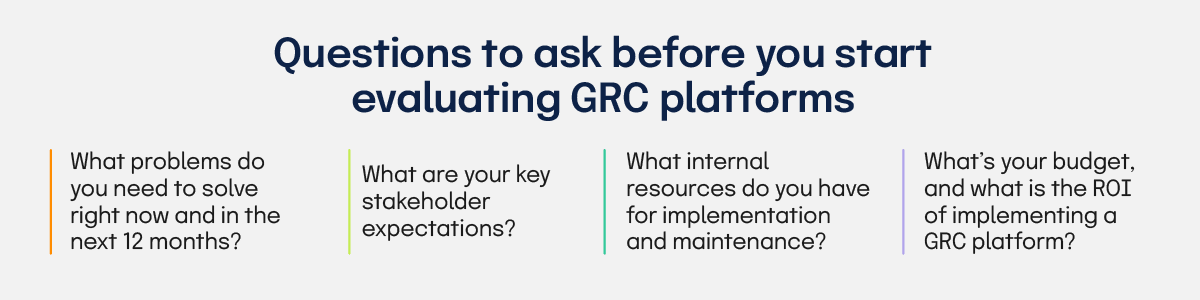
Before you start the evaluation process, there are a few things to consider. Here is a helpful framework of questions that will help you take a step back and evaluate your organization’s needs:
Investing time in discovery will make your evaluation process smoother and ensure that your GRC solution fits your organization’s unique GRC maturity level. Once that groundwork is laid, focus on these eight must-have features.
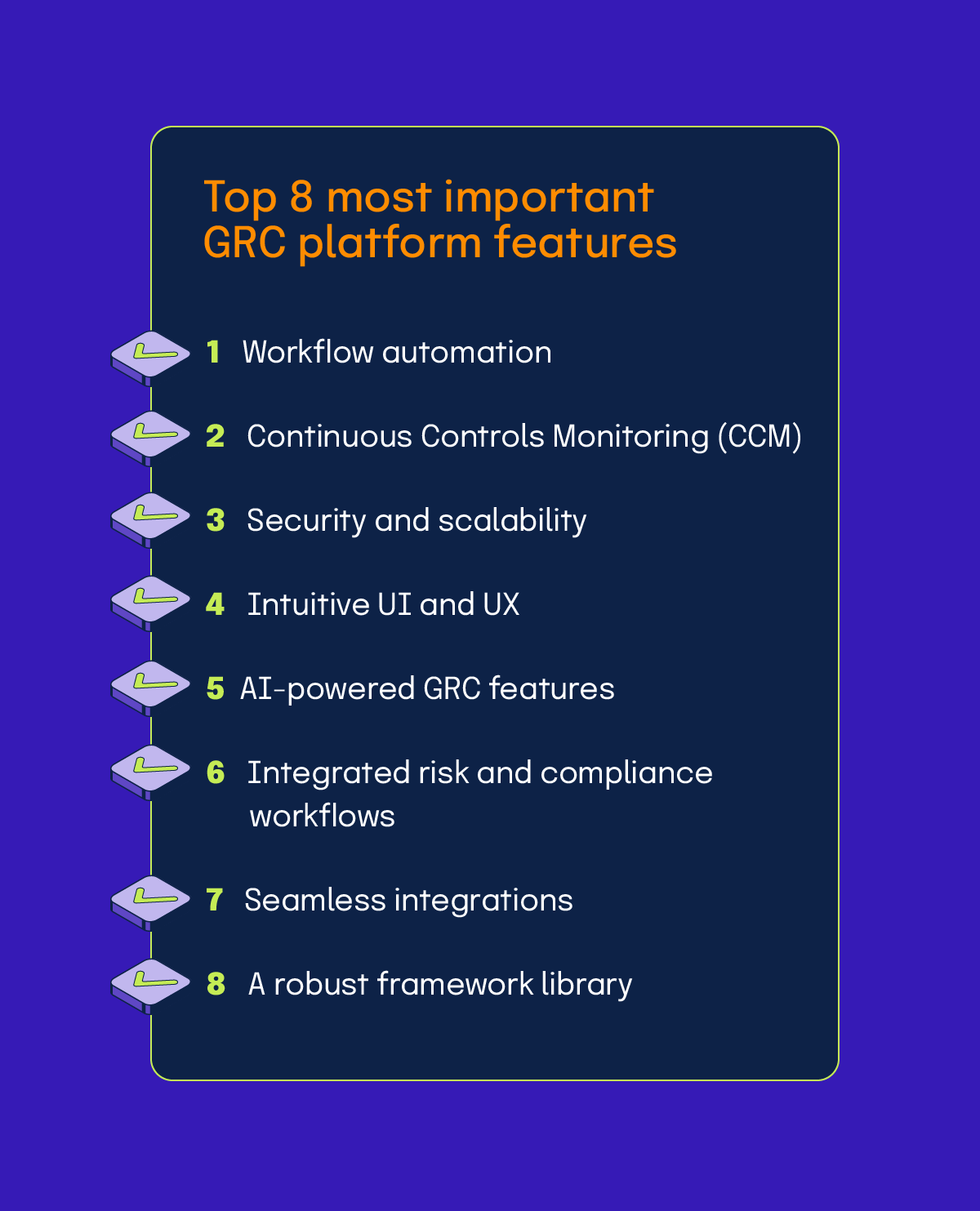
Top 8 most important GRC platform features
1. Workflow automation
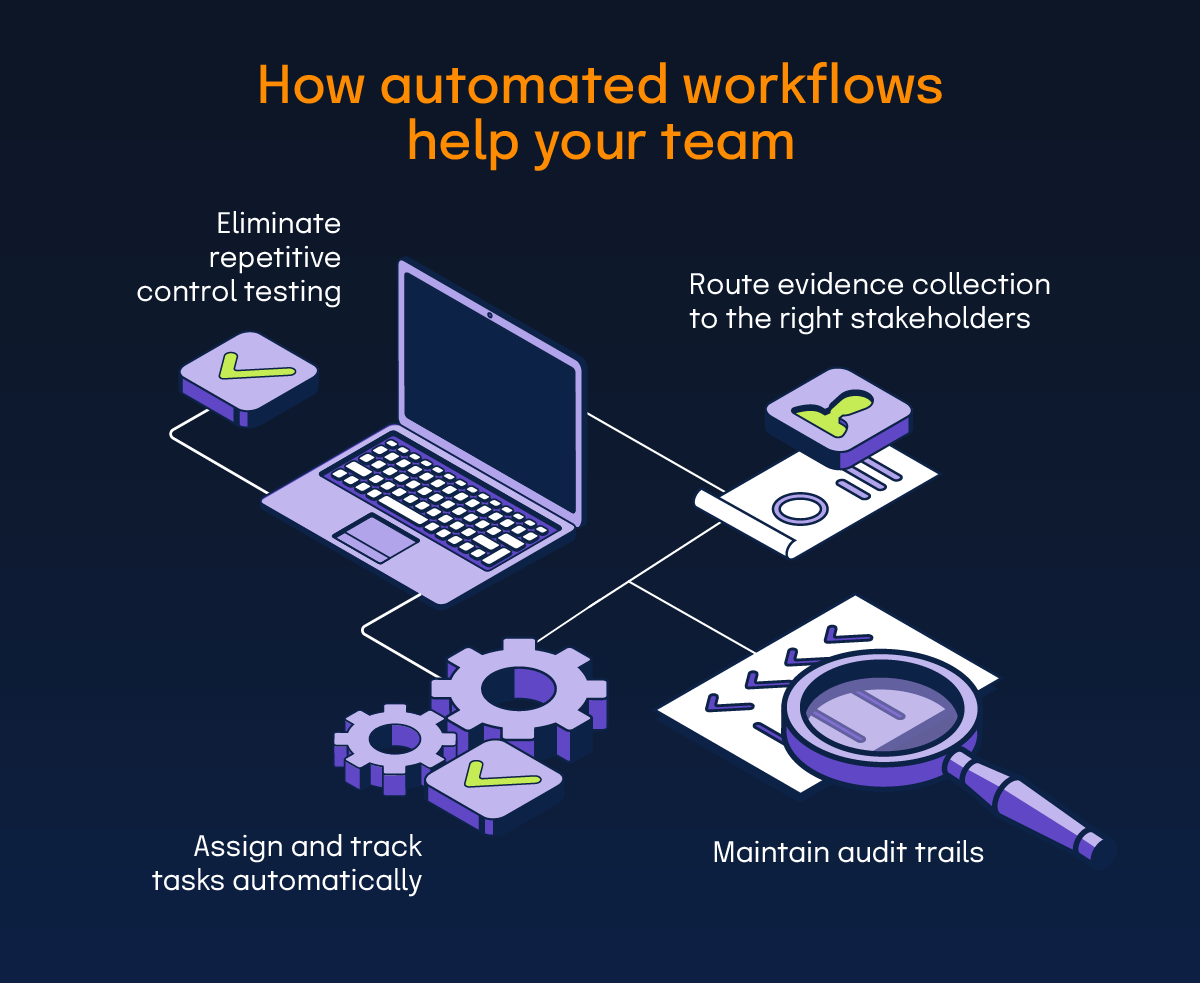
Manual testing and evidence collection are no longer feasible. To manage GRC at scale, organizations need smart automation that minimizes manual work, eliminates redundancies, and reduces errors. It’s important to note that automations should make your team’s lives easier and free up time for strategic tasks.
Managing a GRC platform (and compliance program) should be an active, ongoing process that requires strategic human contribution and oversight at every step. After all, employee knowledge and expertise are what make GRC what it is. Automations should fit into your existing workflows and make your job run smoother
2. Continuous controls monitoring (CCM)
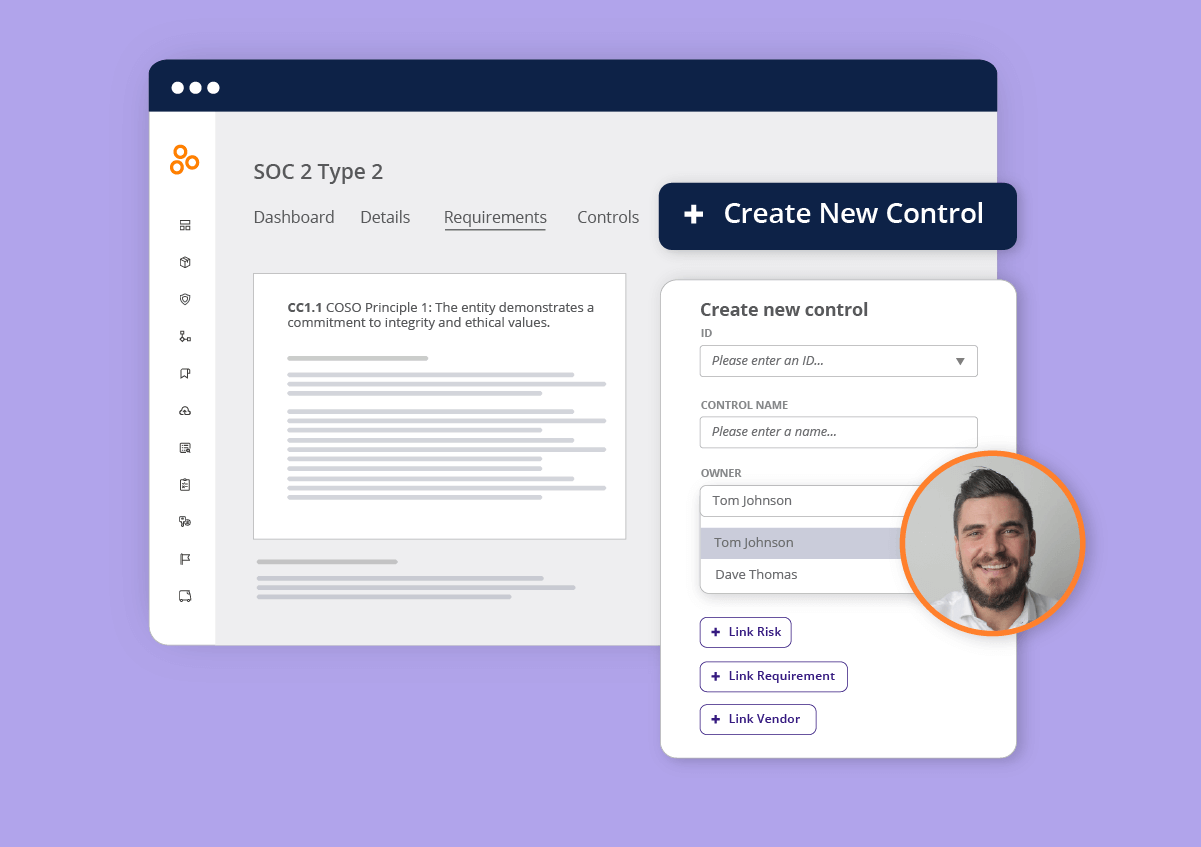
Modern GRC platforms come equipped with Continuous Controls Monitoring (CCM), which automatically validates control effectiveness across your environments and alerts your team to issues in real time. Instead of reacting to control failures after they happen, CCM provides continuous, data-driven assurance that your environment remains secure and compliant. This allows leadership to maintain confidence in compliance posture and respond to risks proactively.
Hyperproof customers like Appian have automated control orchestration across 100+ frameworks, reducing duplicative controls by 66% and saving 350 hours per year on audit prep.
3. Secure and scalable
Security should never be a tradeoff. The right GRC platform delivers enterprise-grade protection and helps you build trust.
A truly secure and scalable GRC solution ensures that every user, device, and integration is verified before access is granted. This means sensitive data, like control evidence, risk assessments, and audit reports, remains protected. Encryption, multi-factor authentication, and fine-grained access controls help safeguard your environment while keeping collaboration seamless.
Secure access to the right data is important, too. Your GRC platform will contain information about your greatest vulnerabilities, so it’s vital that stakeholders only get access to what they need to do their work. Rich collaboration tools within GRC platforms allow you to control who can access what while still enabling team collaboration. Creating tasks, managing teams, and remaining secure should be easy and intuitive within the tool, so you can keep your data safe and organized.
Scalability is another essential piece of the puzzle. As your organization grows across business units, regions, and frameworks, your GRC platform should scale effortlessly. The best solutions allow you to extend security policies, frameworks, and workflows across teams and entities without additional complexity.
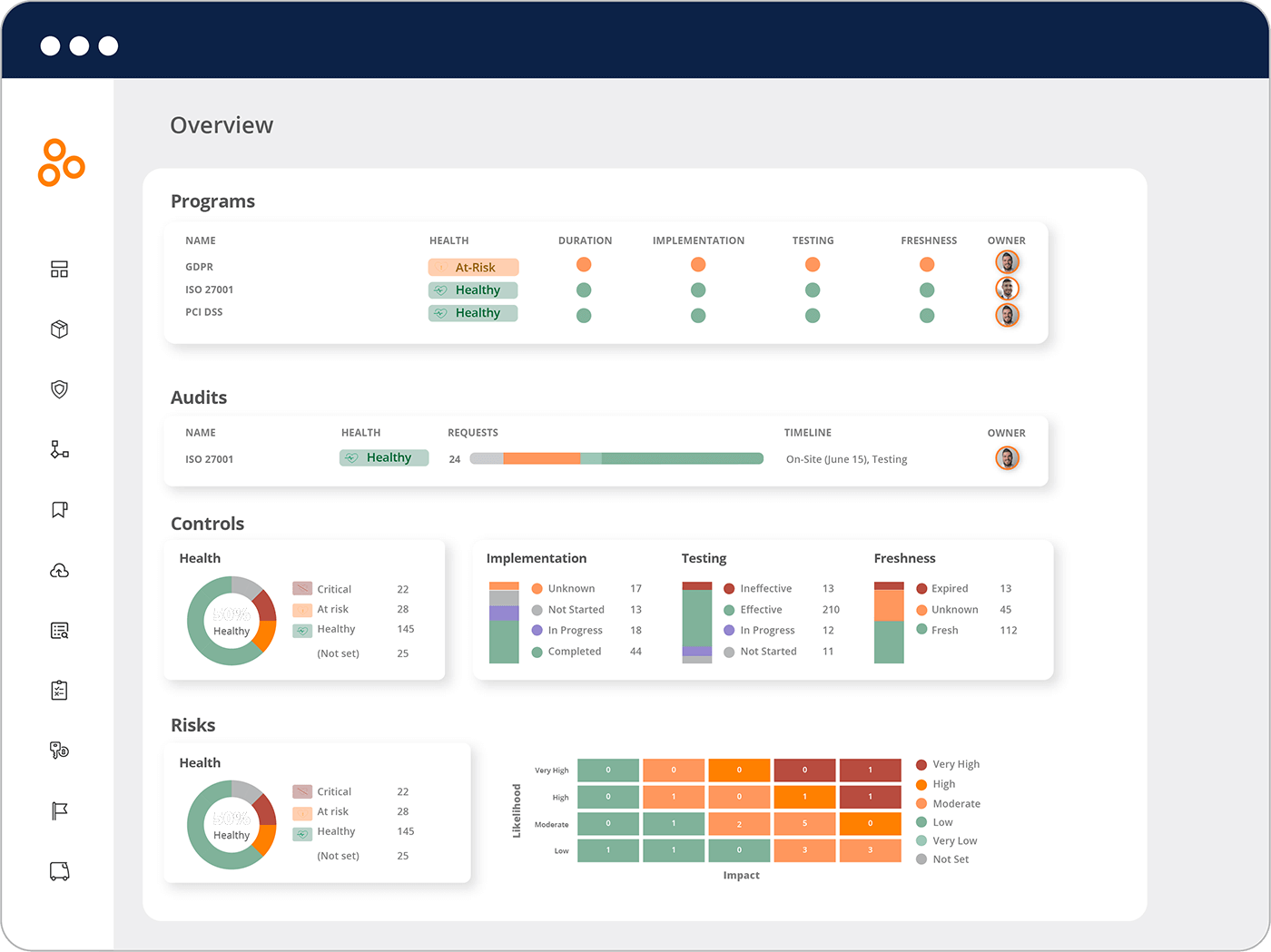
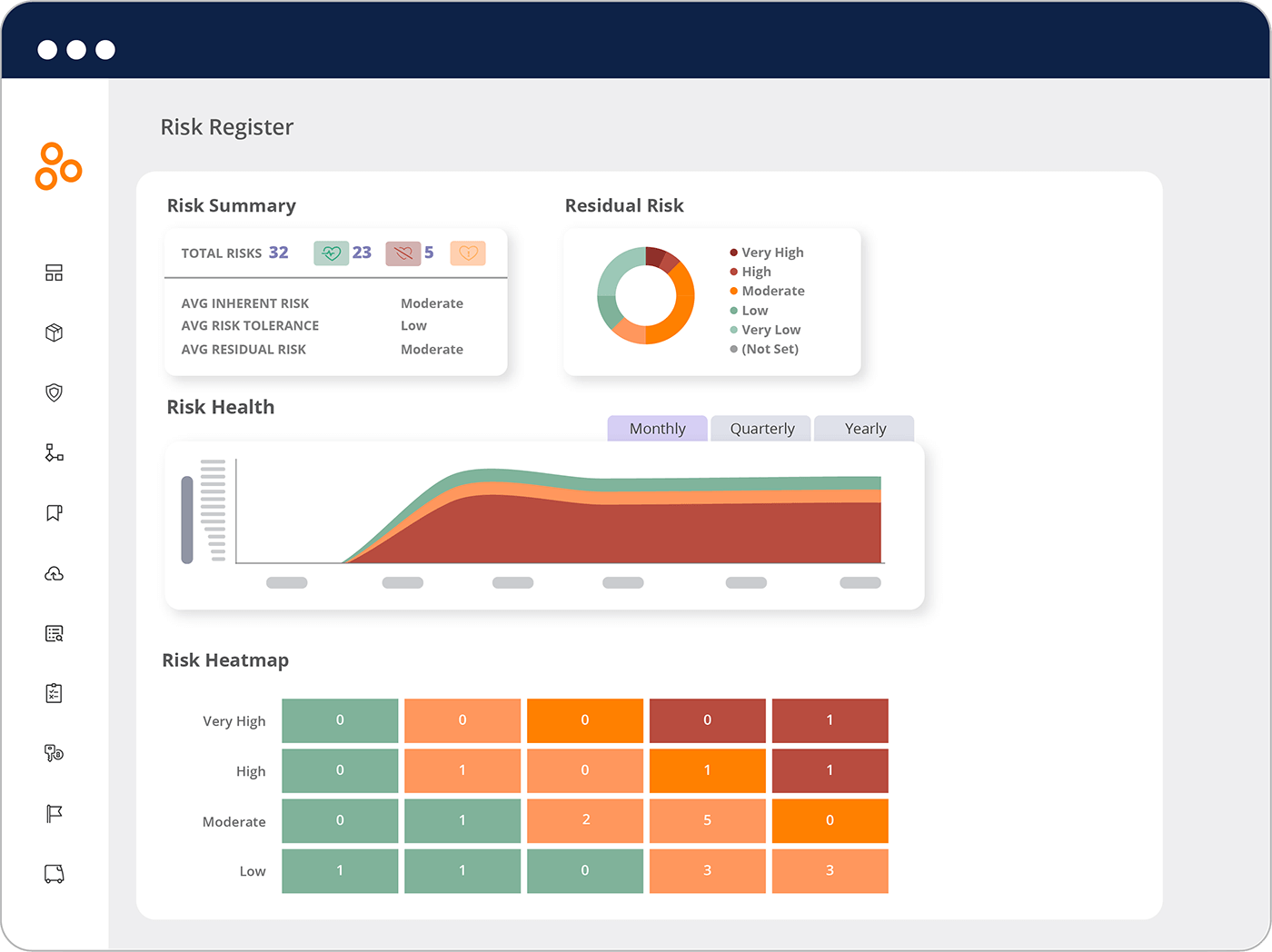
The dashboard provides a clear, up-to-date view of our risk landscape, enabling us to monitor key risks and track compliance metrics seamlessly. Its real-time data ensures that leadership is always informed of the current risk status, helping them make timely and data-driven decisions.”
Cynthia Yin // Head of Cybersecurity Products GRC, Thales
4. Intuitive UI and UX
Many legacy GRC platforms come with clunky interfaces that are difficult to manage. Others have flashy UI and UX with vulnerable databases that anyone could infiltrate. An intuitive UI/UX helps teams adopt the platform quickly, reduces training time, and improves overall compliance culture. When a GRC platform is easy to navigate, your team spends less time managing the tool and more time managing risk.
Luckily, modern, AI-powered GRC solutions deliver ease-of-use so your team can easily manage compliance without building Excel formulas or spending hours trying to navigate an unintuitive platform.
5. Human-in-the-loop AI capabilities
AI is reshaping GRC, challenging organizations to manage emerging risks responsibly while empowering them to achieve new levels of speed, accuracy, and assurance. Many AI product features began as basic automation and chatbot-style assistance, but AI has evolved to a more agentic approach, continuously acting and anticipating with a human-in-the-loop.
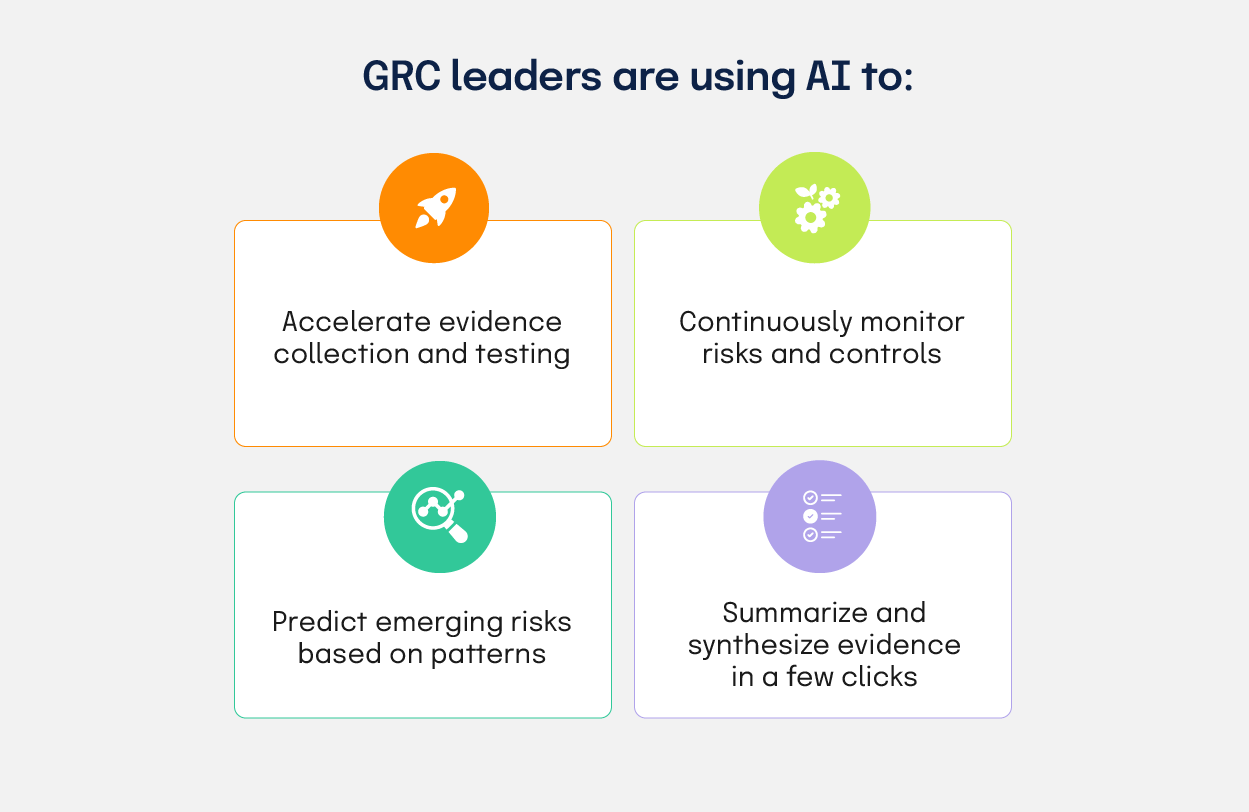
Across GRC, leaders are using AI to:
It’s important to note that not all AI is created equal. Many GRC tools offer narrow, task-based automations that are useful for speeding up individual workflows, but are limited in their ability to scale and often lack the due diligence required to be safe and secure. As more regulations to manage AI risk are implemented, organizations should look for platforms with AI features that balance innovation with accountability.
At Hyperproof, our AI features were built on the foundation of five core tenets:
Hyperproof AI is the only adaptive, unified GRC system that embeds AI across the entire GRC lifecycle with transparency and human oversight built in. Rather than bolting AI onto existing features, Hyperproof has built intelligence into the fabric of the platform, enabling continuous assurance across compliance, risk, and audit functions.
As AI becomes more embedded in GRC, responsible AI governance is now essential. Hyperproof AI is designed with human-in-the-loop control, explainability, and transparency to ensure every automated action enhances accuracy, accountability, and trust.
With trust becoming a true market differentiator, AI is going beyond automating and turning it into a strategic advantage.
6. Integrated risk and compliance workflows
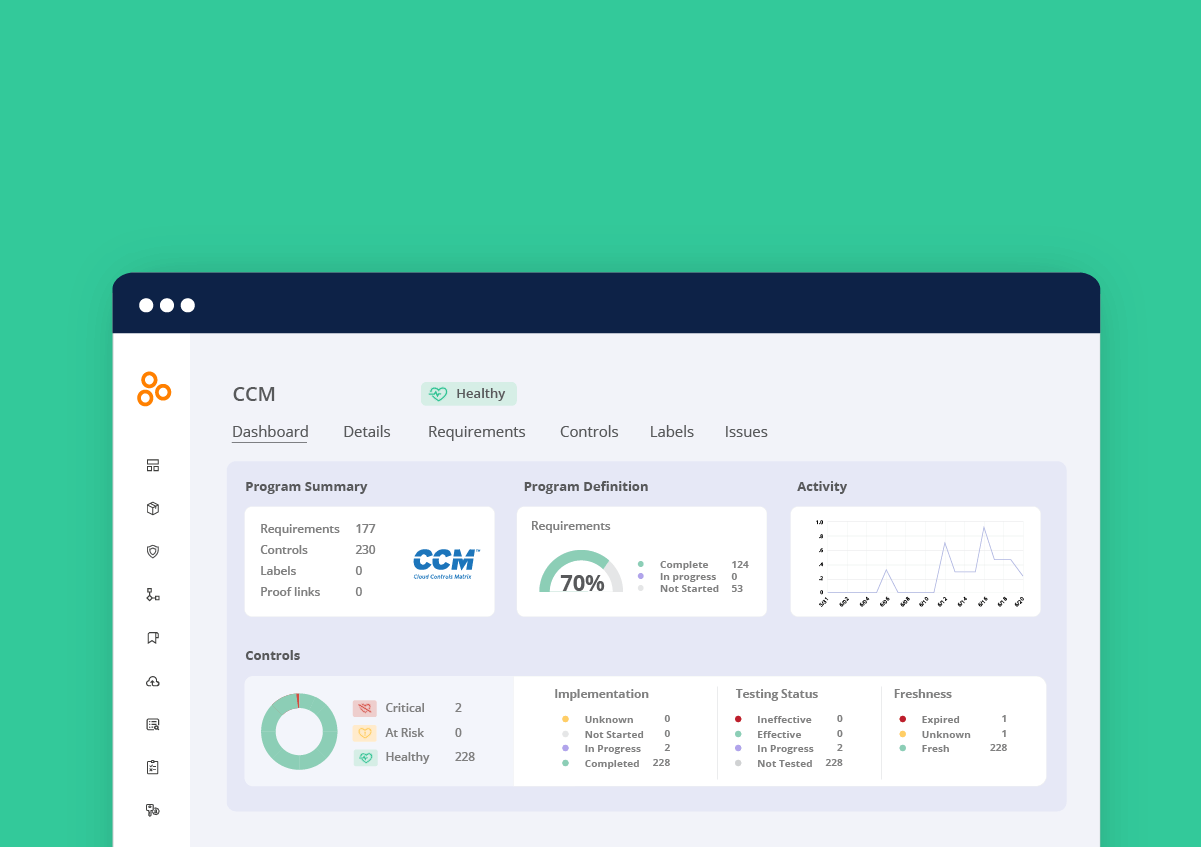
Disconnected spreadsheets can’t keep up with modern GRC programs. Managing compliance in spreadsheets makes reporting slow, manual, and error-prone. Data doesn’t update automatically, so teams waste hours pulling information together and still can’t be confident they are sharing the latest numbers.
A modern GRC platform changes that. With Hyperproof, you get real-time dashboards that show exactly where you stand. See which controls are in good shape and which need attention. Track key risks, monitor changes over time, and view control performance all in one place. With Hyperproof AI, you can summarize results, identify red flags, and share insights with executives in minutes. Dashboards give every stakeholder a single source of truth they can trust. Data updates automatically, visualizations are consistent, and you can see your risk posture at a glance. Robust GRC dashboards and reporting should enable you to instantly present what matters most and communicate your organization’s GRC health.
“We’ve gone from manually pulling evidence of controls to having those controls continuously documented. Hyperproof has saved hours of our time.”
Mark Lee Director of Information Security //
Appian
7. Seamless integrations
If your GRC platform doesn’t connect to the tools your team already uses, you’re stuck doing the work twice. Jumping between systems to pull reports or upload evidence wastes time and increases the chance of errors.
The right GRC platform seamlessly integrates with your existing tech stack, so data flows automatically and compliance work happens where your team already operates. With all your compliance data, evidence, and controls in one place, you gain time back to focus on higher-impact work.
Strong integrations set the foundation for a successful GRC program. They connect all the parts of your compliance operations so teams can collaborate, automate, and move faster.
Hyperproof has 200+ Hypersyncs that seamlessly connect with the tools you love, like Jira, AWS, Okta, Cloudflare, and more. Hypersyncs help you automate evidence collection, eliminate busywork, maintain accuracy, and scale your GRC program without adding complexities.
8. A robust framework library
One of the biggest differentiators in modern GRC platforms is the breadth and depth of framework support. Having a robust framework library empowers teams to quickly adapt to new regulations, reduce audit fatigue, and maintain continuous compliance as standards evolve.
The right solution should give you access to a comprehensive library of industry frameworks so you can manage multiple compliance standards without duplicating effort.
Hyperproof provides the largest framework library on the market, allowing organizations to easily map controls across 140+ frameworks. This flexibility allows teams to scale compliance efforts across jurisdictions and industries without starting from scratch.
Looking for more framework resources?
What are the top challenges when implementing a GRC platform?
Even with the right GRC platform in place, implementation can come with real challenges. Understanding them upfront helps teams plan more effectively and realize value faster.
Stakeholder alignment
Getting buy-in from internal stakeholders requires a clear ROI narrative. Frame the investment in a GRC platform around estimated risk reduction, time savings, and other strategic outcomes.
Data migration and integration
Moving existing internal controls and documentation into a new GRC platform takes time. Prioritize platforms with strong native integrations to reduce this friction.
Defining and standardizing GRC processes
Many organizations implement a GRC platform without first mapping their GRC processes. Before implementation, document current compliance and risk management workflows so the platform can mirror and improve them.
Keeping up with changing regulatory requirements
Regulatory requirements frequently change. The right tool should make it easy to adopt new frameworks and update controls without a full-scale re-implementation. The ability to easily crosswalk your controls is essential here so you can easily map your existing work to a new framework.
Avoiding over-reliance on automation
Automation is a force multiplier, but GRC works best when human expertise drives strategy. Be sure that the tool you choose will enable you to build GRC workflows that keep people accountable for outcomes, not just processes.
Which GRC platforms are considered the best in 2026?
The GRC platform market has matured significantly. Leading solutions in 2026 are distinguished by their ability to unify GRC work in a single platform rather than offering disconnected point solutions.
Top platforms like Hyperproof stand out for their robust framework template library, native AI capabilities, continuous controls monitoring, and seamless integrations that automate evidence collection across your entire tech stack. Collectively, these features enable organizations to get to compliance quickly.
When evaluating which GRC platform is right for your organization, look for solutions that will help you reach continuous compliance. The best platforms will eliminate manual GRC processes while keeping human oversight central to every workflow.
Find what matters to your organization
Ready to see Hyperproof in action?
Choosing the right GRC platform is hard, but knowing what’s most important for your organization makes the decision clear. You need a platform with all the features listed above that enable your team to maintain compliance without the headache of manual processes or inflexible legacy solutions.
Hyperproof gives you everything you need to manage GRC at scale. It’s intuitive, flexible, and built to eliminate spreadsheets for good so your team can focus on strategy, not admin work. In simple terms, a GRC platform is the system of record that brings all your governance, risk, and compliance work together so everyone is working from the same, always-current source of truth.
Related Resources



Ready to see Hyperproof in action?