Scaling Smart: Lessons from the 2026 Framework Adoption Trends

Updated on: Aug 31, 2026 4 Minute Read
The compliance landscape continues to shift fast, and if you feel like you are constantly chasing the next framework, you’re not alone. Hyperproof’s 2026 IT Risk and Compliance Benchmark Report looked at the frameworks your peers are using, how they handle regional variance, and their ongoing battle against spreadsheet sprawl.
Whether you’re leaning into common controls or struggling to standardize across regions, here is what the current framework adoption trends mean for your day-to-day operations and how you can smartly scale your GRC operations.
Broad framework adoption and the beginnings of AI risk operationalization
Respondents report broad framework adoption, with 53% of respondents using ISO 27001 and 48% using NIST CSF. SOC 2® frameworks remain widely used for assurance-driven programs. Privacy regulation alignment is also substantial, with meaningful representation across GDPR and U.S. state privacy requirements.
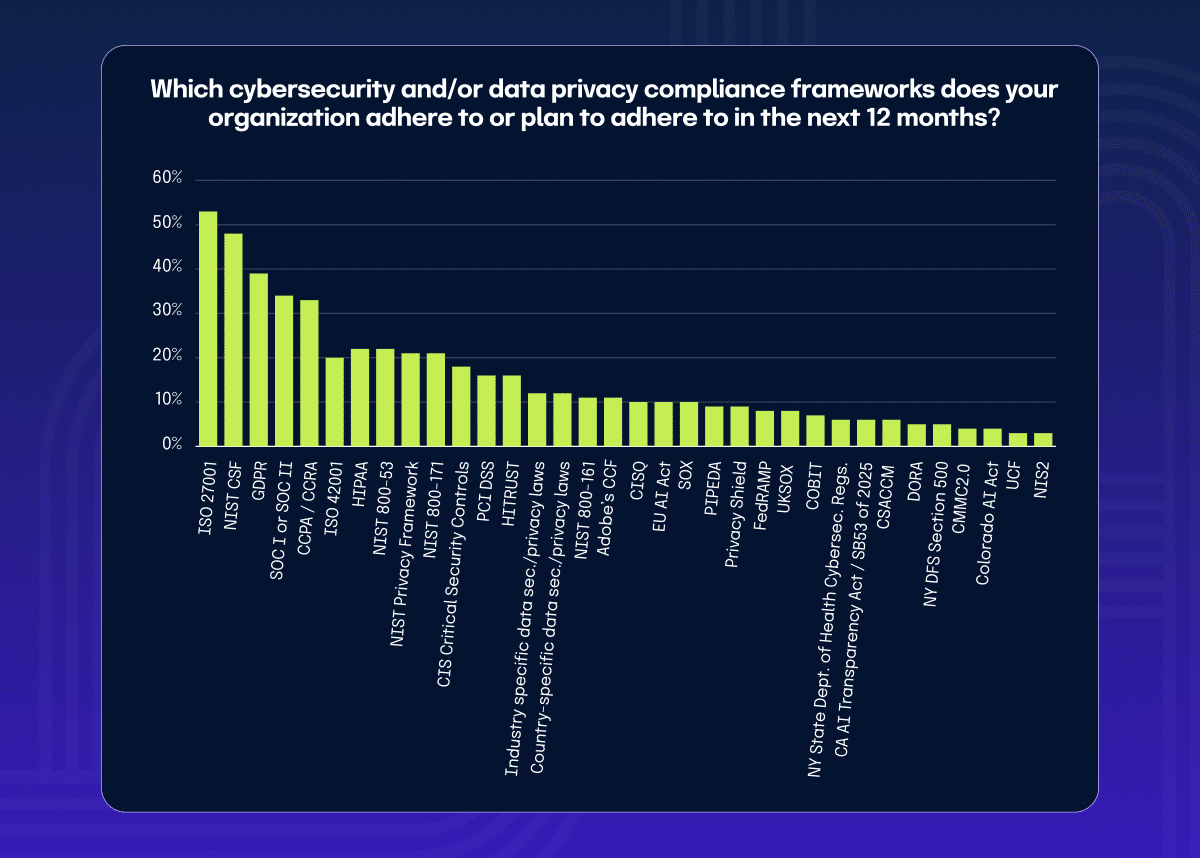
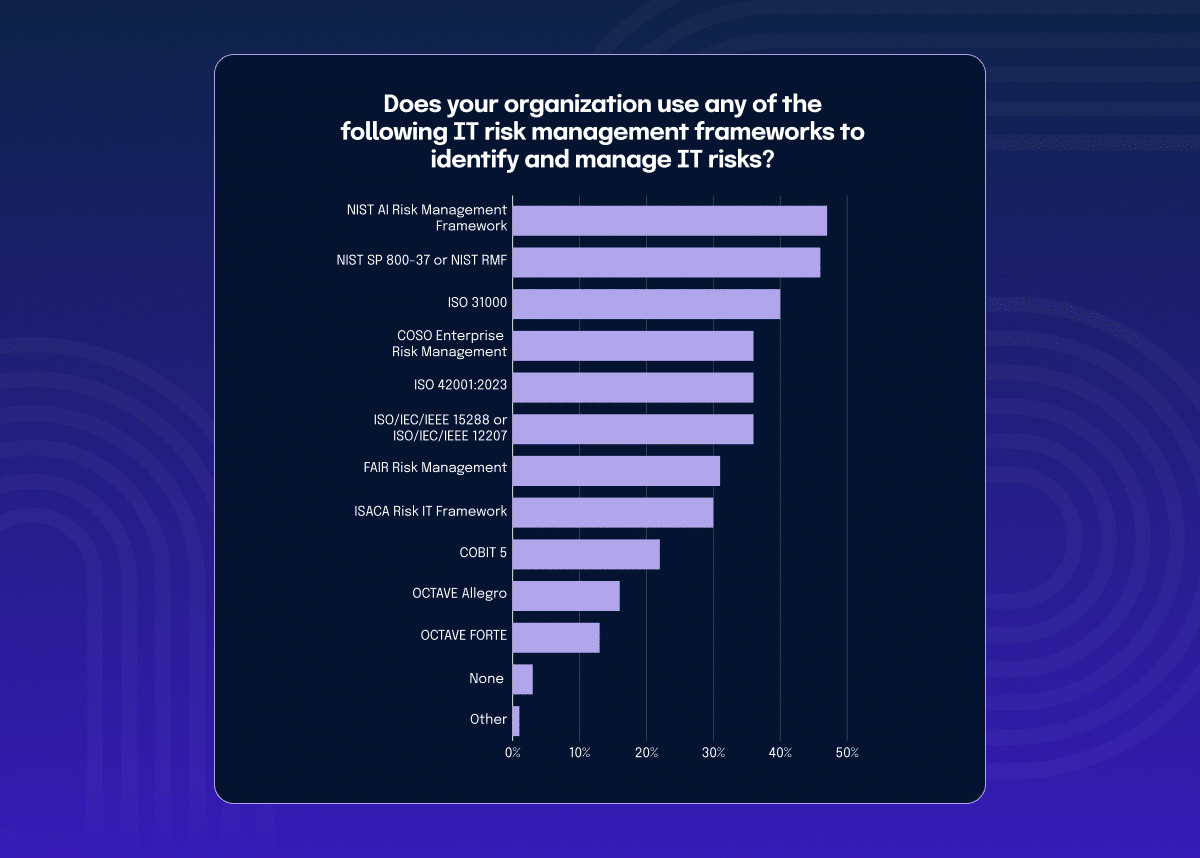
Risk framework utilization closely mirrors compliance framework adoption. NIST and ISO standards remain central, which is expected given their role in structuring risk identification, assessment, and control alignment. What is newly prominent is the breadth of AI risk frameworks currently in use. This suggests that organizations are not treating AI risk as a side initiative, but as an emerging pillar within their risk management toolkit.
Two main approaches: common controls framework vs ‘most rigorous law’
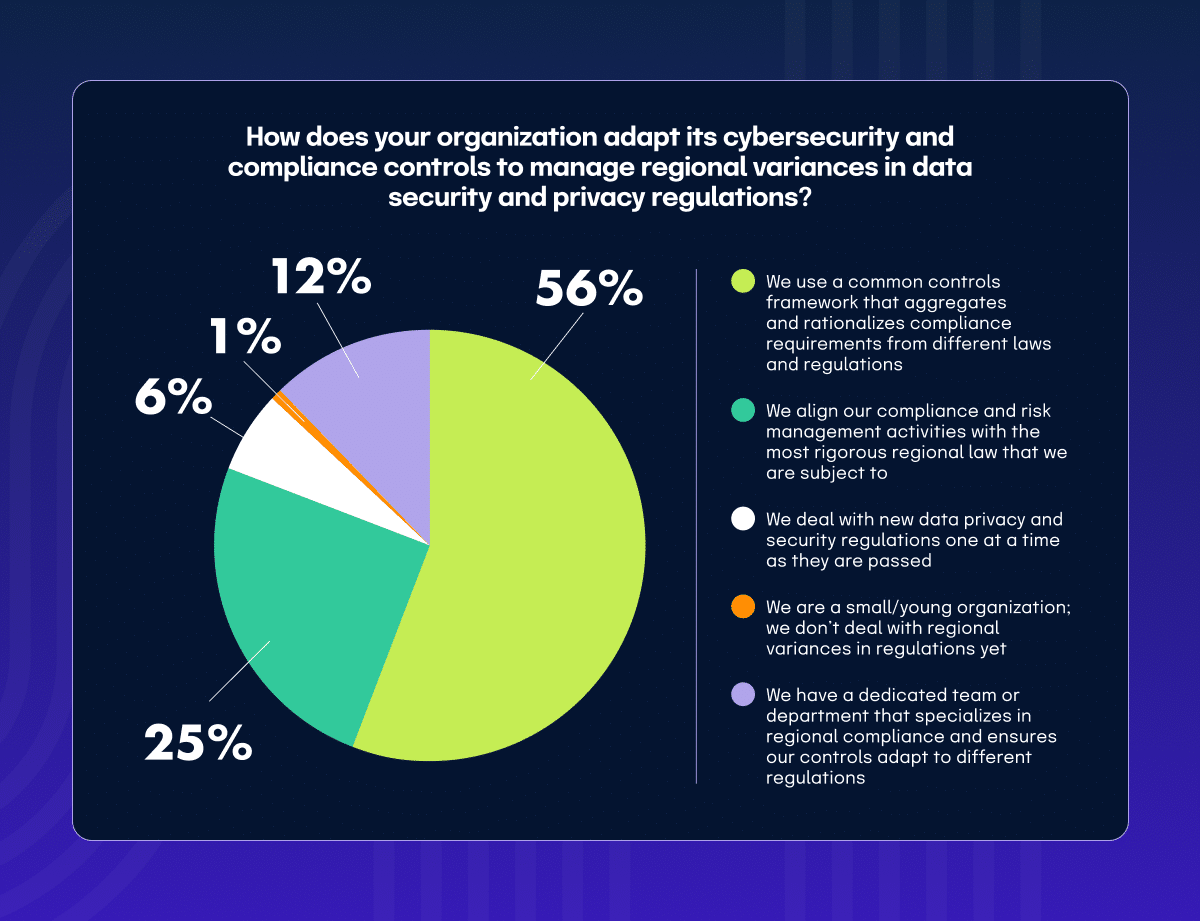
When organizations face regional variation in privacy and security requirements, most respondents indicate their strategy tends to fall into one of two approaches. The most common approach (56%) is rationalization through a common controls framework, indicating a preference for standardization and reuse. The second-highest group (25%) aligns with the most rigorous applicable law, essentially setting a single bar and applying it across the organization.
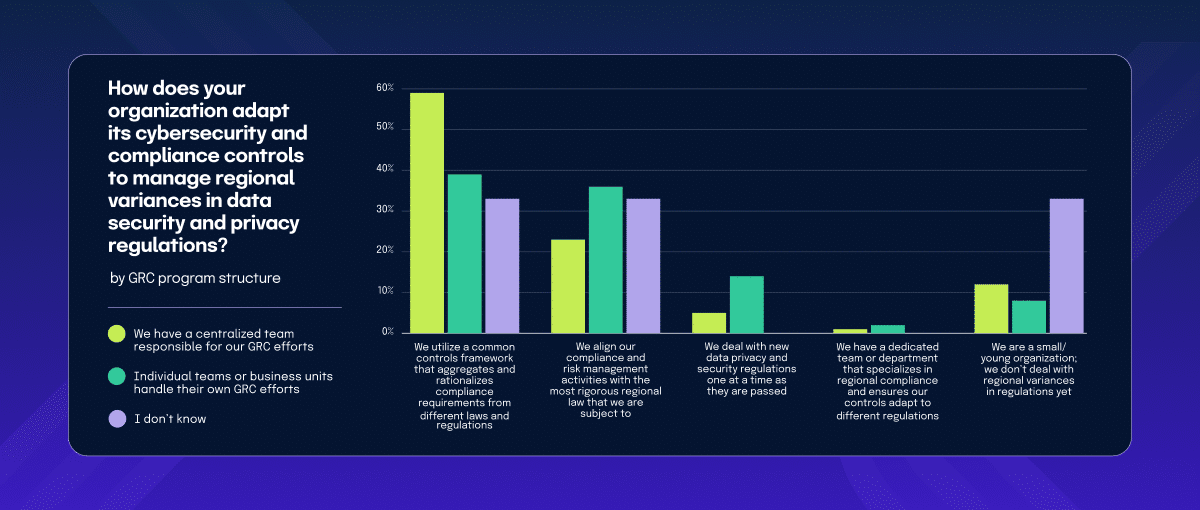
Centralized programs are substantially more likely to adopt a common controls framework approach, while distributed programs are more likely to default to “most rigorous law.”
Cloud risk management platforms dominate, but spreadsheets and forms still linger
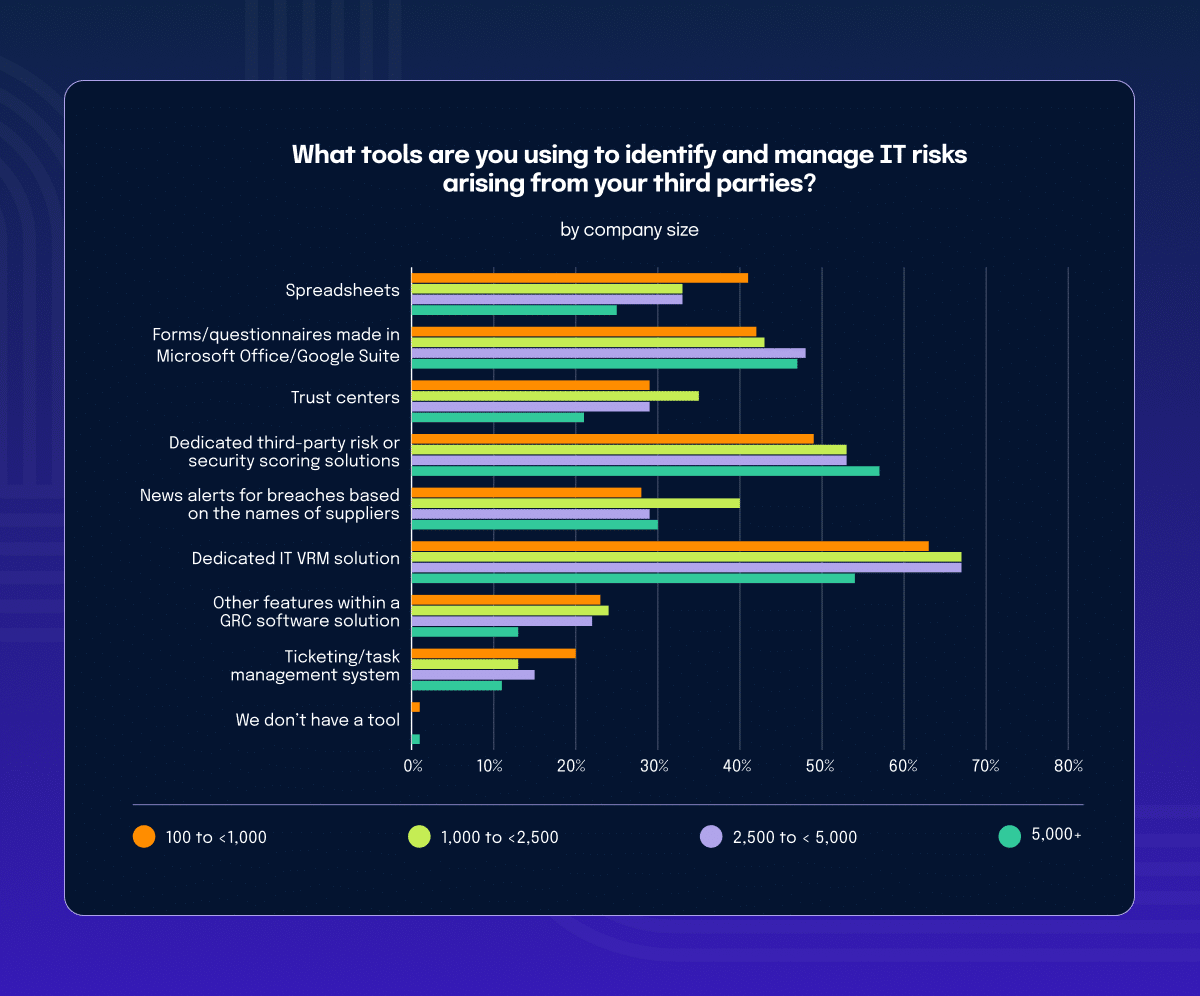
Tooling choices reveal an important dual reality. Most respondents report using the risk management module in a cloud-based GRC platform for first-party risk tracking, suggesting strong platform adoption. At the same time, spreadsheets and forms remain widely used alongside those platforms. This combination is common in practice: teams adopt a platform for structure and reporting, but spreadsheets persist for local workflows, side analyses, and ad-hoc tracking.
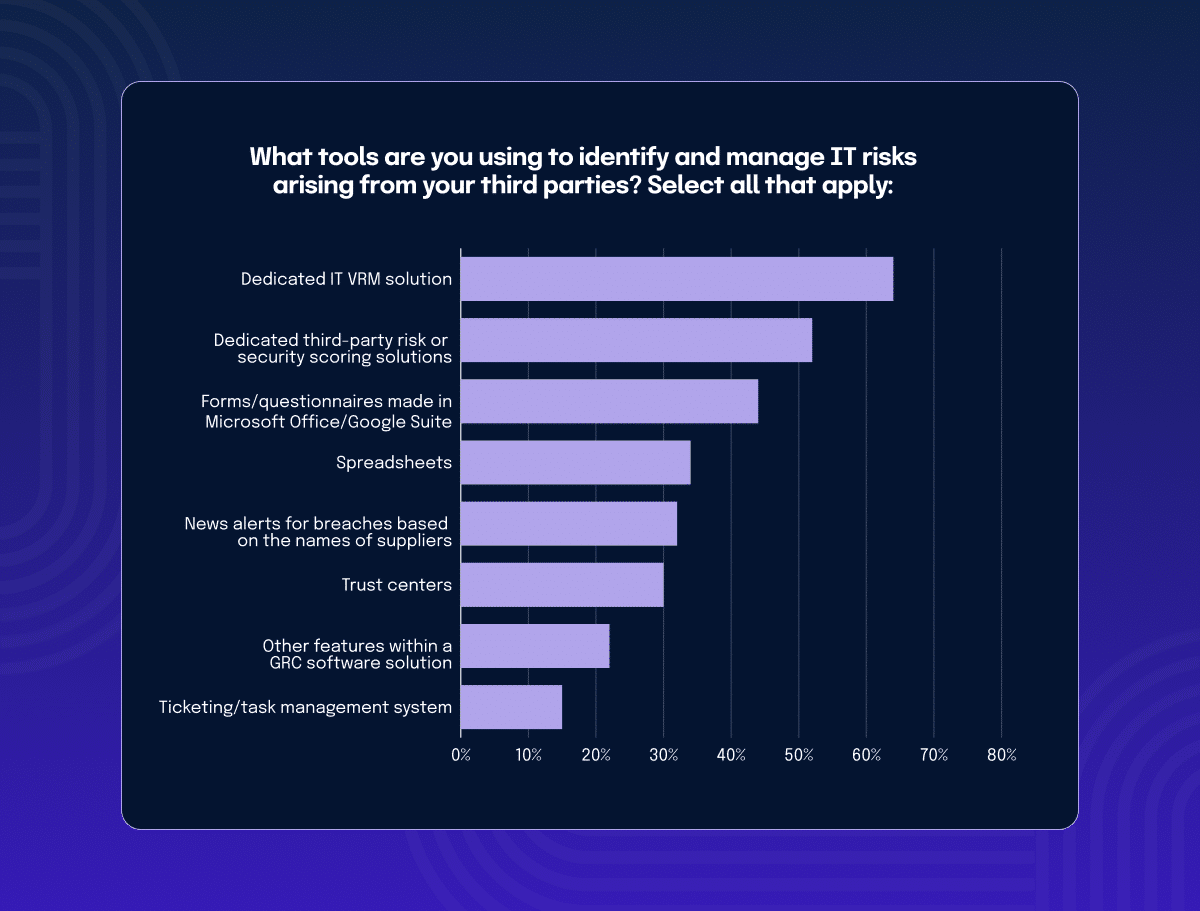
The data also showed that larger organizations are more likely to use a cloud-based risk module, while reliance on spreadsheets can increase in certain mid-market bands, reflecting a transition phase in which programs are scaling but not yet fully consolidated.
How to take action based on framework adoption best practices
The framework adoption trends from Hyperproof’s benchmark report highlight three actions you can take to ensure your team is positioned to smartly scale your GRC operations in the second half of 2026.
- Start operationalizing AI risk. Your peers are adopting a range of AI risk frameworks to comply with US state and international regulations, such as the EU AI Act and NIST AI Risk Management Framework (NIST AI RMF). Leverage these established frameworks to get started on an action plan to achieve AI compliance.
- Adopt a common controls framework. The wide adoption of a common controls framework reflects a practical reality that many GRC teams have learned the hard way. As organizations operate across more jurisdictions, add more frameworks, and face more frequent regulatory changes, managing each requirement independently becomes unsustainable. Slow framework adoption carries a real cost, and our report data demonstrates that leveraging a common controls framework is now best practice.
- Retire the spreadsheets and forms. Based on our report, it’s clear that organizations still struggle to fully transition to an automated risk management platform. Spreadsheets and forms are legacy artifacts that fragment risk, making it harder to maintain consistent ownership and traceability. Map out how your risk identification, assessment, remediation tracking, and control monitoring actually flow today, and identify where the handoffs break down.
Take the learnings from the 2026 IT Risk and Compliance Benchmark Report into planning sessions for 2H 2026
Related Resources


Ready to see Hyperproof in action?